Pocket Computers · Volume 9
Collecting
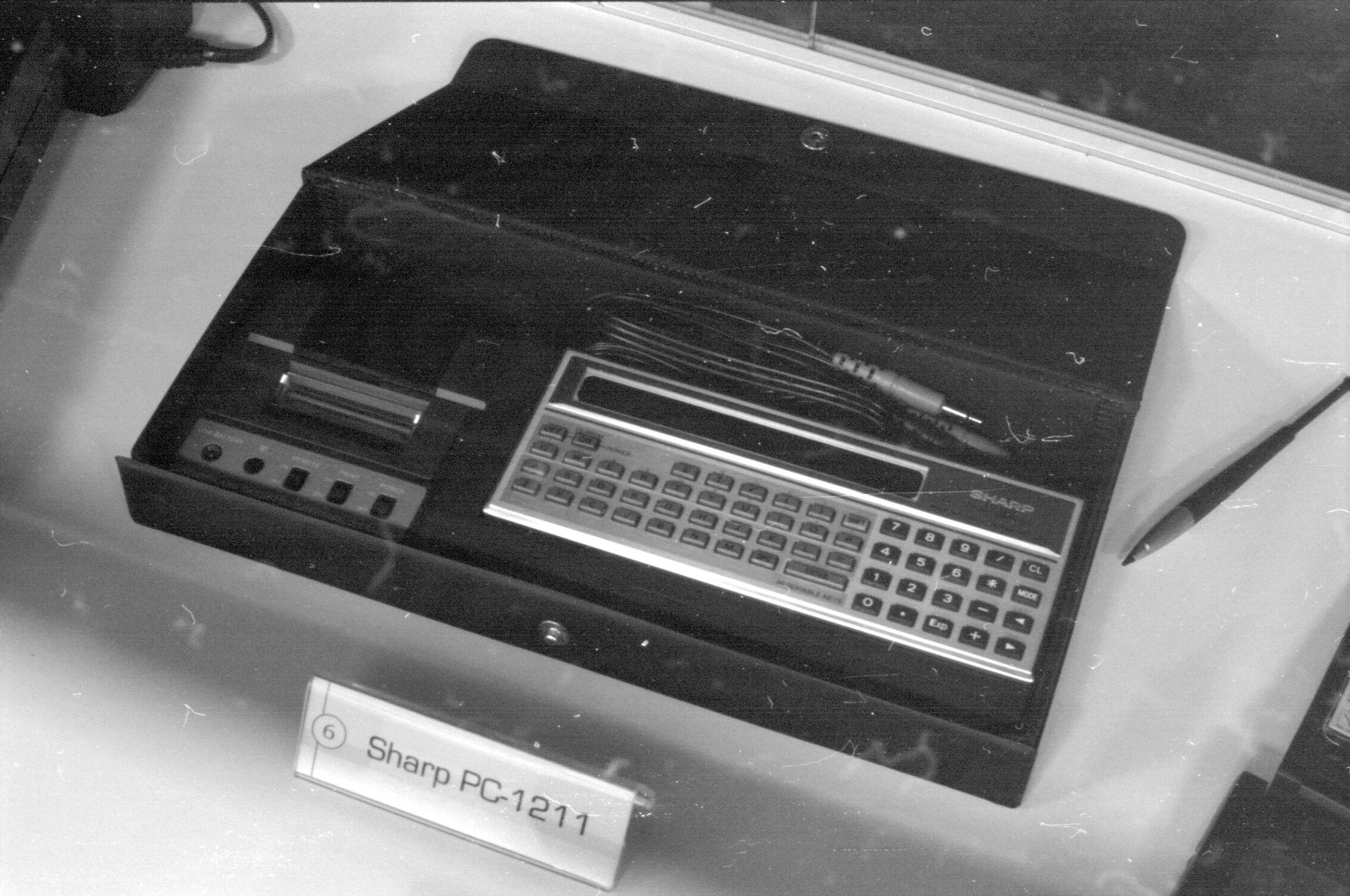
Pocket computers are among the cheapest ways into vintage computing. Radio Shack and Sharp sold them in large numbers, they are small and light to post, and most still work once given fresh cells. The PC-1 and PC-1211 have one catch, the display, which has failed or is failing on nearly every one; a machine with a clear original display is the find. The later Sharps and Casios are common, the Hewlett-Packards are prized, and the last Japanese school machines still turn up new.
9.1 What they cost
Prices are thin and mostly asking prices; these are from eBay listings and a few recorded sales found in 2026.
Table 1 — What they cost
| Machine | Price | Kind |
|---|---|---|
| TRS-80 PC-1, working, with case | about $90–100 | asking |
| TRS-80 PC-1, sold outright | $62.95 | sold |
| TRS-80 PC-1 with the 26-3503 Cassette Interface | $149–199 | asking |
| TRS-80 PC-1 for parts or not working | $30–48 | asking |
| Sharp PC-1211 with CE-122, complete and working | C$109.95 (about US$80) and $129 | sold |
| Sharp CE-122 for parts | $39.99 | sold |
| Sharp PC-1211 with a damaged display | $59 | sold |
| Casio FX-702P, working | about A$100 | sold |
| HP-71B, “mint”, with case | $695 | sold |
| Sharp PC-G850VS, used | about $240–280 | asking |
| Sharp PC-G850VS, new in box | about $600 | asking |
The rough rule for the PC-1211 family is $80–130 for a working computer with its interface, and under $60 for one sold for parts. Most of those parts machines are parts machines because of the display.
9.2 What to look for
- The display. Ask for a photograph with the machine switched on and a full line of characters showing. Dark patches at the ends or along an edge are the seal failure described in the repair volume, and they spread. A reproduction display can cure it, if one can be found.
- The cell compartment. Leaked cells corrode the contacts; on the PC-1 the leakage shows round the badge.
- The keys. Every key should register; the ALL RESET switch should be tried before a machine is written off as dead.
- The interface. Expect the 26-3505’s Ni-Cd pack to be dead. Boxed sets with the original EA-11E adapter turn up only occasionally, and a healthy original pack is rare.
- The extras. The owner’s manual, the carrying case, the reference card, and the software tapes in their boxes.
A Sharp PC-1211 and a Radio Shack PC-1 are the same machine inside: the Sharp has a brown case, the Radio Shack a black one with a grey display frame. The PC-1210 and PC-1212 share the case and display, which makes them donors too.
9.3 Other pocket computers to look for
- Sharp PC-1500 / TRS-80 PC-2: the most capable of the early ones, with its four-colour plotter.
- Sharp PC-1251 / TRS-80 PC-3 and the PC-1401 and PC-1403: small, cheap and common.
- Casio PB-100 / Tandy PC-4 and the FX-702P: Casio’s first.
- HP-75C and HP-71B: the expensive and well-built ones, with a strong following.
- Sharp PC-E500 and PC-G850: the late machines, with more memory, bigger displays and, on the G850, C as well as BASIC.
- Elektronika MK-85 and MK-90: the Soviet pocket computers, covered in the Soviet calculators series.
9.4 Emulators
No true emulator of the PC-1211 exists, because its ROM has never been read out. The PockEmul emulator, which runs many Sharp and Casio pocket computers on phones and computers, added a PC-1211 simulator in December 2025, available to its subscribers as a preview “because it still have a lot of bugs”; its author says a real emulation must wait for access to the ROM. Most of the later Sharps, the PC-1500 and the PC-G850 among them, are emulated in full.
For tapes, Torsten Mücker’s PocketTools converts between PC-1211 cassette recordings and files, so programs from the old books can be played into a real machine from a computer.
9.5 Books and programs
The PC-1 had a small library of its own, and much of it is in the Reference Library:
- Jim Cole’s TRS-80 Pocket Computer Programs (1981), fifty ready-to-run programs, sold by Radio Shack and by Artsoft.
- John Clark Craig, 119 Practical Programs for the TRS-80 Pocket Computer (TAB, 1982).
- Problem-Solving on the TRS-80 Pocket Computer (Wiley, 1982), a self-teaching guide.
- Jim Cole’s Pocket Computer Programming Made Easy (ARCsoft, 1982).
- Sharp’s PC-1211 Applications Manual, 314 pages of programs for equations, matrices, statistics and coordinates, and its Beginner’s Textbook for BASIC.
- Won J. Park’s report for the US Air Force’s Materials Laboratory, August 1981, Radio Shack TRS-80 Pocket Computer solutions to composite materials formulas, and Rex Shudde’s Naval Postgraduate School report on Loran-C position fixing with the HP-75C, the Sharp PC-1500 and the TRS-80 Model 100: the machines at work.
9.6 Where to find out more
- trs-80.org (Matthew Reed) and trs-80.com (Ira Goldklang), for Radio Shack’s machines, catalogue pages and repair notes.
- sharppocketcomputers.com (Bill Symmes) and Valentin Albillo’s archive at albillo.hpcalc.org, for Sharp’s manuals, brochures and magazine scans.
- The HP Museum forum, where PC-1211 owners discuss displays, cells and tape transfers.
- PockEmul, for emulators of the later machines.
9.7 The documents in the Library
Everything in the Reference Library for this series:
- The PC-1 and its interfaces: the owner’s manual, the reference card, the service manual, the 26-3505 Printer/Cassette Interface manual.
- Sharp’s originals: the PC-1211 and CE-121 service manual, the PC-1211 instruction manual, the CE-122 manual, and the brochures and flyers for the PC-1211, the PC-1210 and PC-1211 (second version) and the CE-122.
- Radio Shack’s software: Games, Games II, Statistical Analysis, Engineering Math II.
- History: Saam’s History of Pocket Computers 1980–2000, BYTE’s hand-held computers and PC-1211 pages of January 1981, and Albillo’s Know Thy Foe.
- Other machines: listed at the end of the volume on the pocket computers.
9.8 Gaps
No service manual for the CE-122 printer interface has been found outside one collector’s site that cannot be downloaded automatically, nor the pin-by-pin assignment of the PC-1’s connector, nor a die photograph of its processors. The ROM has never been read. Market prices are mostly asking prices. Radio Shack’s Surveying software manual is on the Internet Archive but could not be downloaded for the Library.
Comments (0)