Graphing Calculators · Volume 3
Colour, Python and Rivals, 2000–2026
By 2000 the graphing calculator had settled into the form it still has: a monochrome screen of a few thousand dots, a keyboard laid out for algebra and statistics, AAA batteries, and flash memory for applications. The next quarter-century added colour, rechargeable batteries, Python and exam modes, and brought a new competitor from France, but changed the shape remarkably little. Texas Instruments’ own line shows it best: when it launched the colour TI-84 Plus CE in 2015, it promised the same keys and menus as the monochrome TI-84 Plus of 2004.
3.1 The TI-84 Plus, 2004
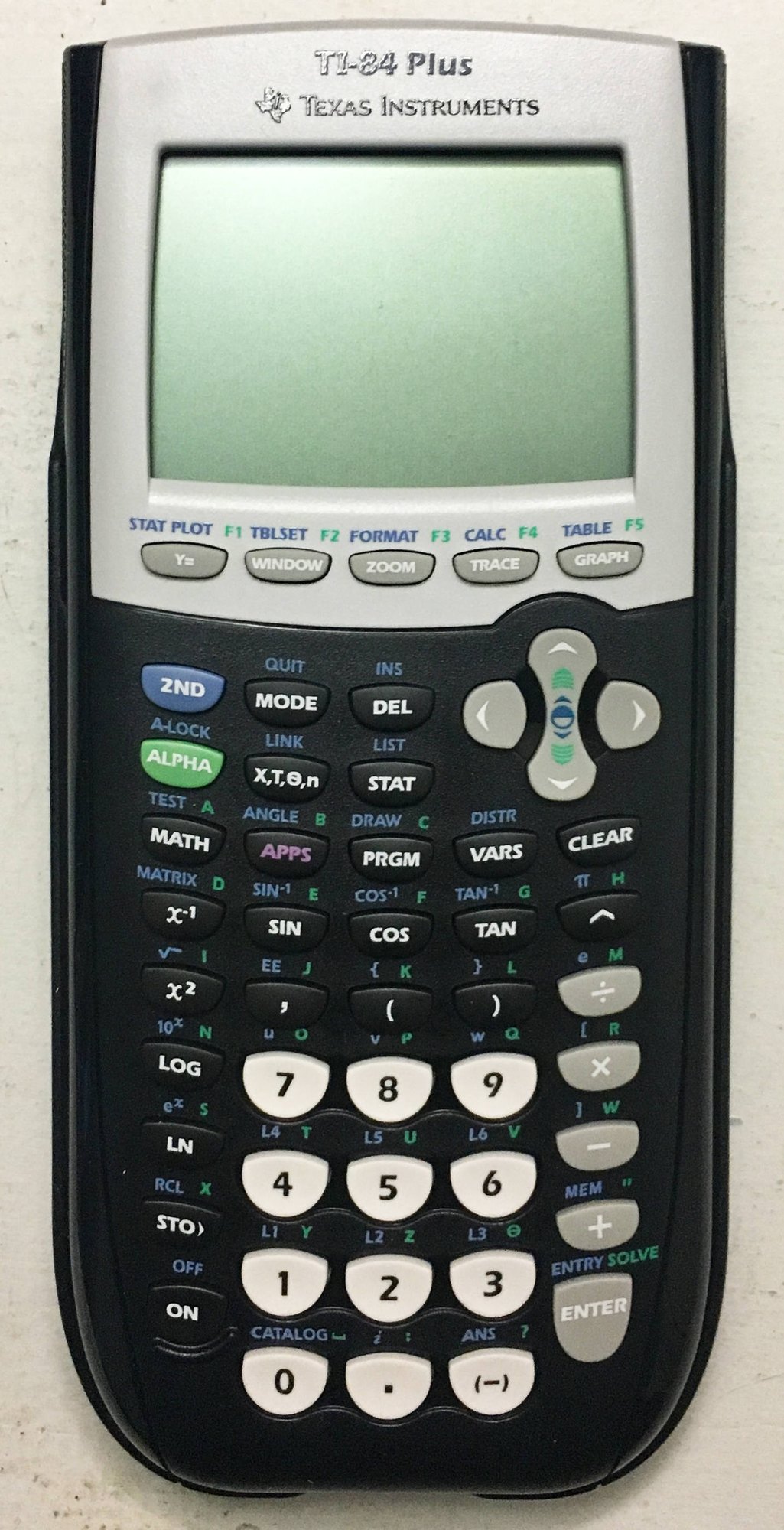
The TI-84 Plus of 2004 was an updated TI-83 Plus with a faster processor, a Z80 at 15 MHz, a mini-USB port, a real-time clock and more flash: 480 KB for the user, or 1.5 MB on the Silver Edition. It weighed 7.4 oz and ran, like its ancestors, on four AAA cells with a button cell to keep the memory while they were changed. In 2005 its operating system 2.40 added Press-to-Test, a mode that switches off programs and applications for an exam (volume 4). Its starting list prices were $109.99 and $129.99. More than twenty years later the plain TI-84 Plus is still in production, with 24 KB of memory for the user and a 96 × 64 screen, and Target still listed it at $139.99 in October 2026, more than the colour model.
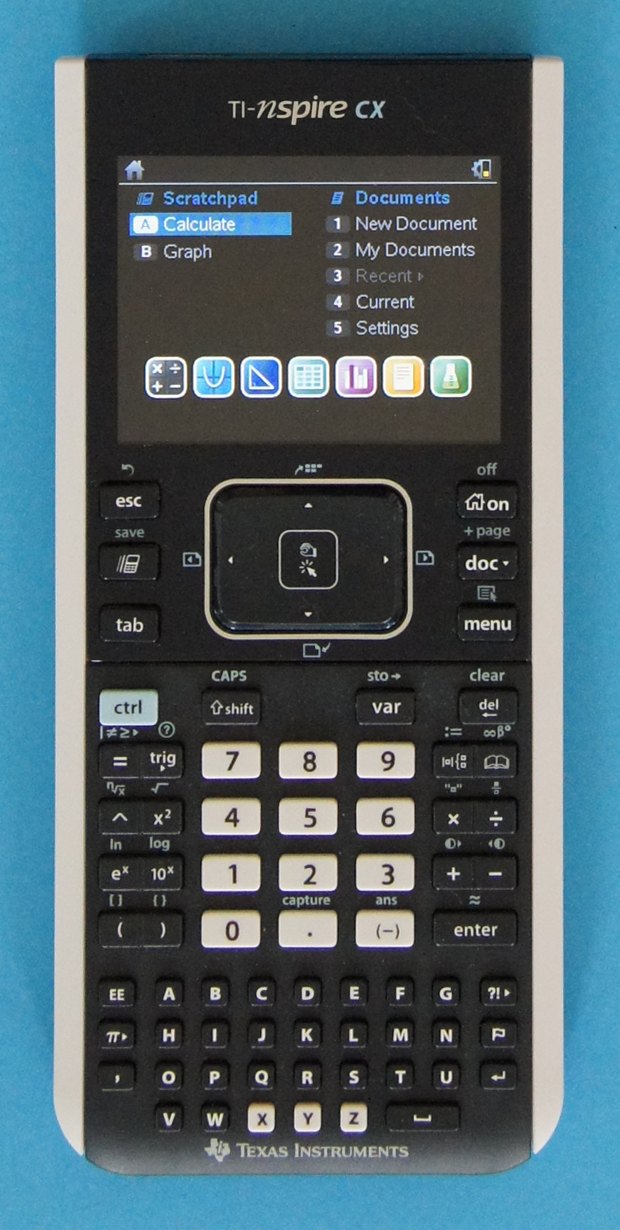
Alongside it TI kept its algebra machines, the TI-89 Titanium of 2004 and the Voyage 200 of 2002, and in 2007 launched a new platform, the TI-Nspire, built round an ARM processor. The TI-Nspire CX of February 2011, with a 320 × 240 colour screen and a rechargeable battery, was TI’s first colour graphing calculator.
3.2 Colour comes to the TI-84
The TI-84 family got colour two years later. A Cemetech forum member found a TI-84 Plus C Silver Edition in a school test in November 2012, and TI announced it on 18 January 2013. It had a 320 × 240 colour screen, a removable 1,200 mAh lithium-ion battery in place of the AAA cells, and 3.5 MB of flash for the user, but it kept the TI-84 Plus’s 15 MHz Z80 and chip. The result was slow. The old processor had to send every pixel to the screen’s controller itself, at least 29 clock cycles and two or three writes a pixel, so that, by Cemetech’s analysis, a full screen could be redrawn at most about seven times a second, and some menus took “close to a full second to fully render”. Its reviewer wished for “a 25MHz ez80 CPU”.
3.3 My TI-84 Plus CE, 2015
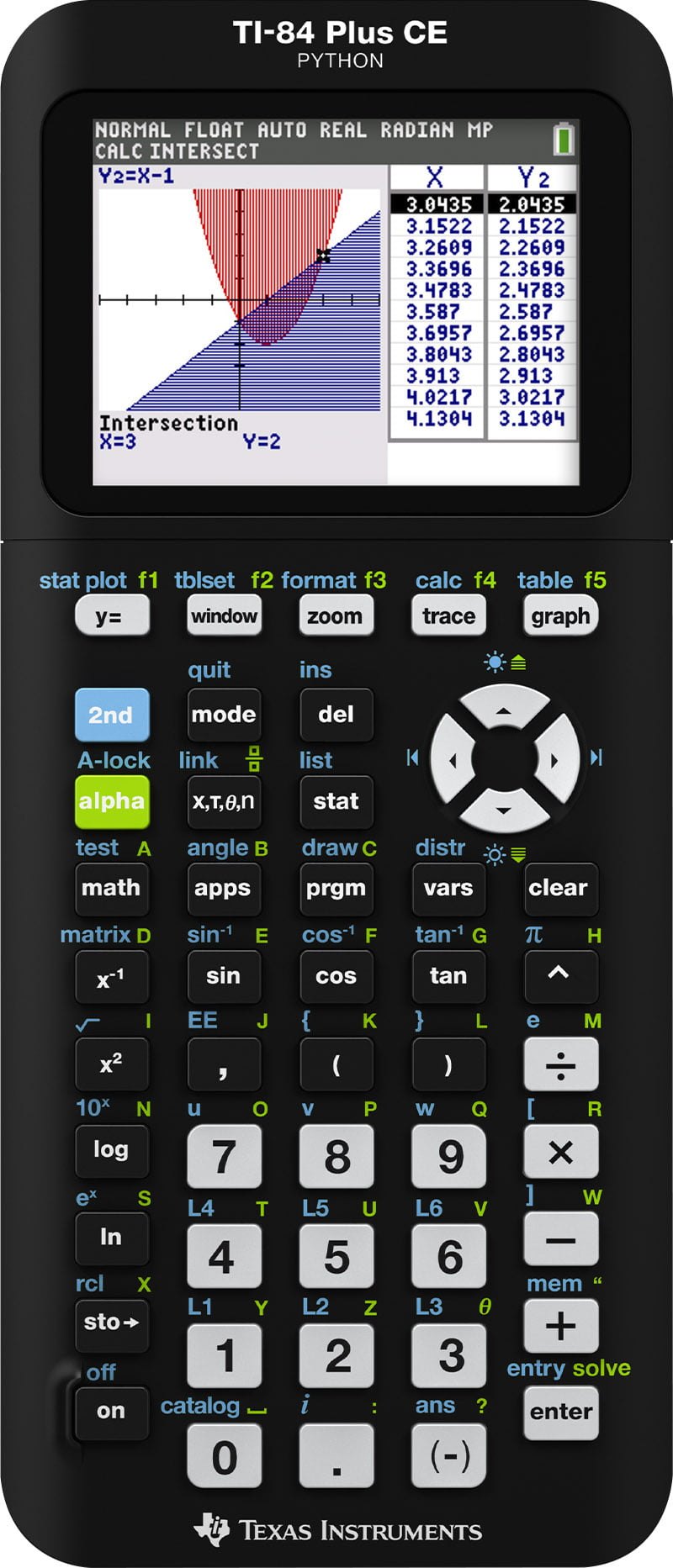
TI did more than that. The TI-84 Plus CE, announced on 27 January 2015, used an eZ80 core at 48 MHz inside a new TI chip, gave the screen a frame buffer in memory that a controller in the chip copied to the panel by itself, and was thinner and lighter than the TI-84 Plus. Cemetech, which saw a retailer’s listing two weeks before the announcement, guessed that it was “likely the first TI-8x since the TI-80 not to use a Z80”. The 2.5 mm link port of the older models was gone; USB did everything, including charging.
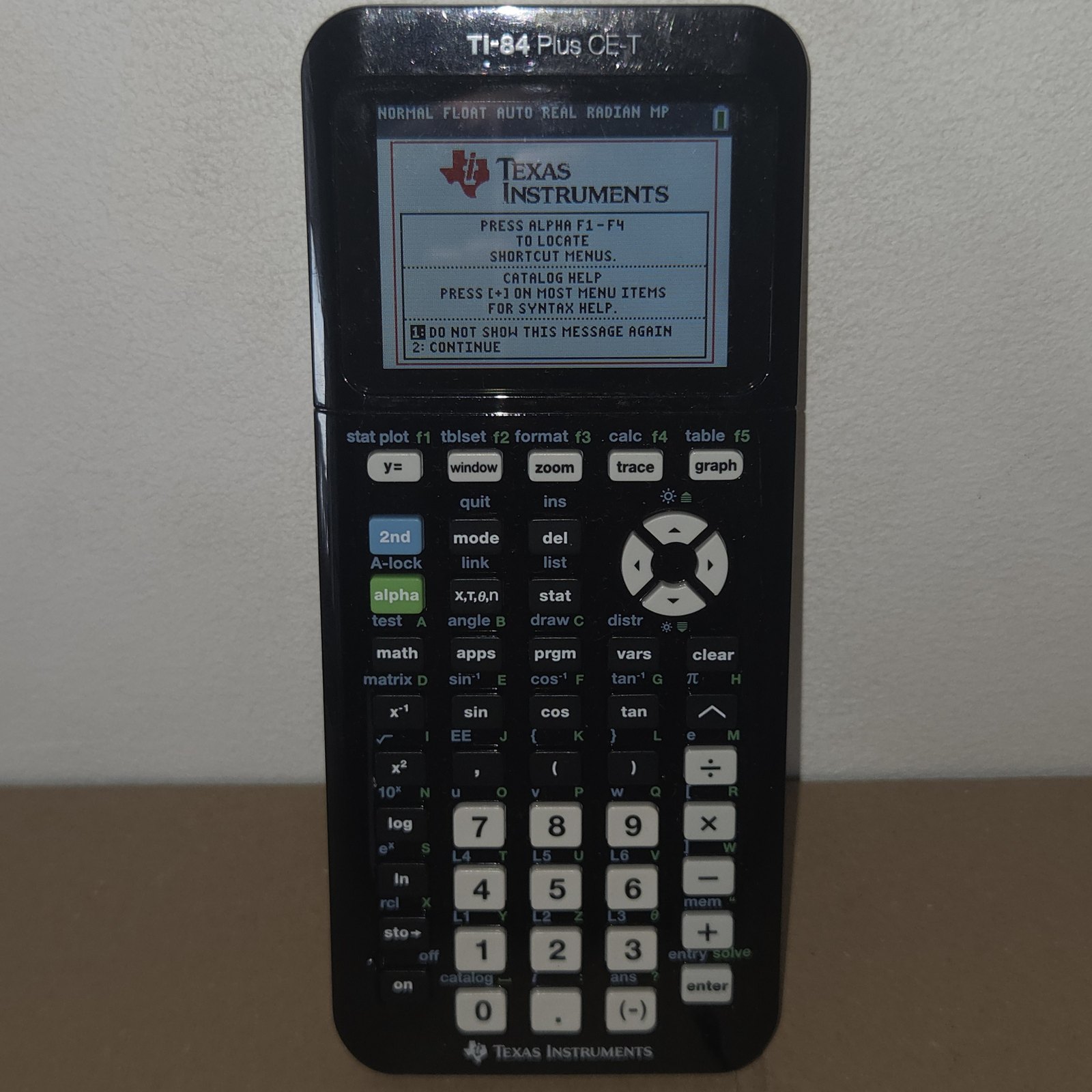
Versions followed for other markets. In France TI sold the same calculator as the TI-83 Premium CE from 2015; in Europe the TI-84 Plus CE-T of 2016 added a light that blinks in exam mode; the Netherlands had had a monochrome TI-84 Plus T with such a light since 2015. Hardware revision M, from May 2019, changed the board and moved to a serial flash chip. Volume 5 takes the CE apart.
3.4 Python
In 2018 Casio and TI both turned to Python. TI could not run it on the CE’s own processor and memory. Its first solution, for the French TI-83 Premium CE, was a plug-in USB module, the TI-Python adapter, containing a separate microcontroller, an Atmel SAMD21 running CircuitPython, Adafruit’s version of Python for small boards. The next step was to put that chip inside the calculator. The TI-83 Premium CE Edition Python came in 2019, the TI-84 Plus CE-T Python Edition in 2020, and the TI-84 Plus CE Python for North America on 26 July 2021, when it replaced the plain CE there. TI’s guide says its Python runs “separate and different from the CE OS calculations”.
3.5 The TI-84 Evo, 2026
The CE’s successor was announced on 28 April 2026. The TI-84 Evo has a processor TI calls three times faster, a graph area “50 percent” larger, a simplified keypad, a home screen of icons, a USB-C port, and seven colours; Engadget gave its price for individual buyers as $160, and Target listed it at $115.99 in October 2026. TI’s announcement stressed what it does not have: “no Wi-Fi, notifications, or social media”. Laura Chambers, president of TI Education Technology, said it “represents our commitment to continuous innovation in educational technology”. According to Wikipedia, the TI-84 Plus CE Python was discontinued in 2026, with Python moving to the Evo.
3.6 Casio: colour first
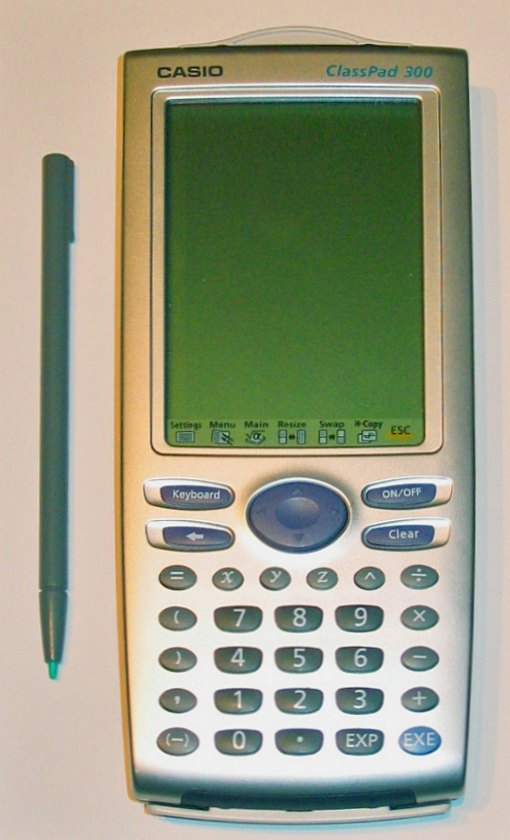
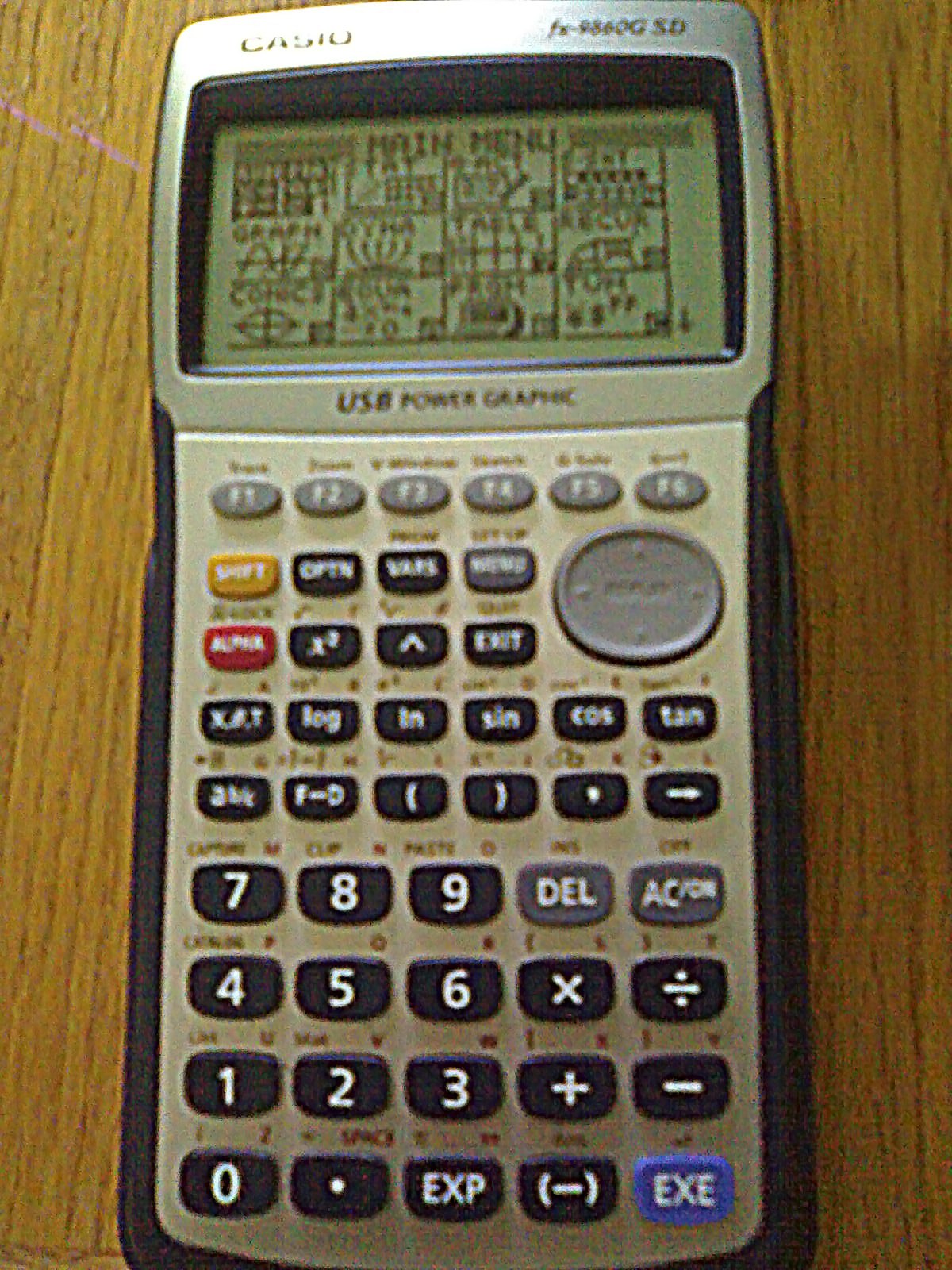
Casio kept its own line through the period. The ClassPad 300 of 2003 had a 160 × 240 touch screen worked with a stylus, Casio’s own computer algebra system and geometry, at a starting price of $249.95; the fx-9860G of 2005 was its monochrome model, with a 128 × 64 screen. In January 2011 Casio launched the Prizm, the fx-CG10 and fx-CG20, with a 384 × 216 screen in colour, 16 MB of flash and a Renesas SuperH processor at 58 MHz. Wikipedia calls it “the world’s first ‘full color’ graphing calculators”; the TI-Nspire CX came out within weeks of it. The fx-CG50 of 2017, sold in France as the Graph 90+E, gained MicroPython in 2018. The fx-CG100, announced in September 2024 and sold in France as the Graph Math+, dropped Casio BASIC and add-in programs and offers Python only.
3.7 Hewlett-Packard: Saturn to ARM
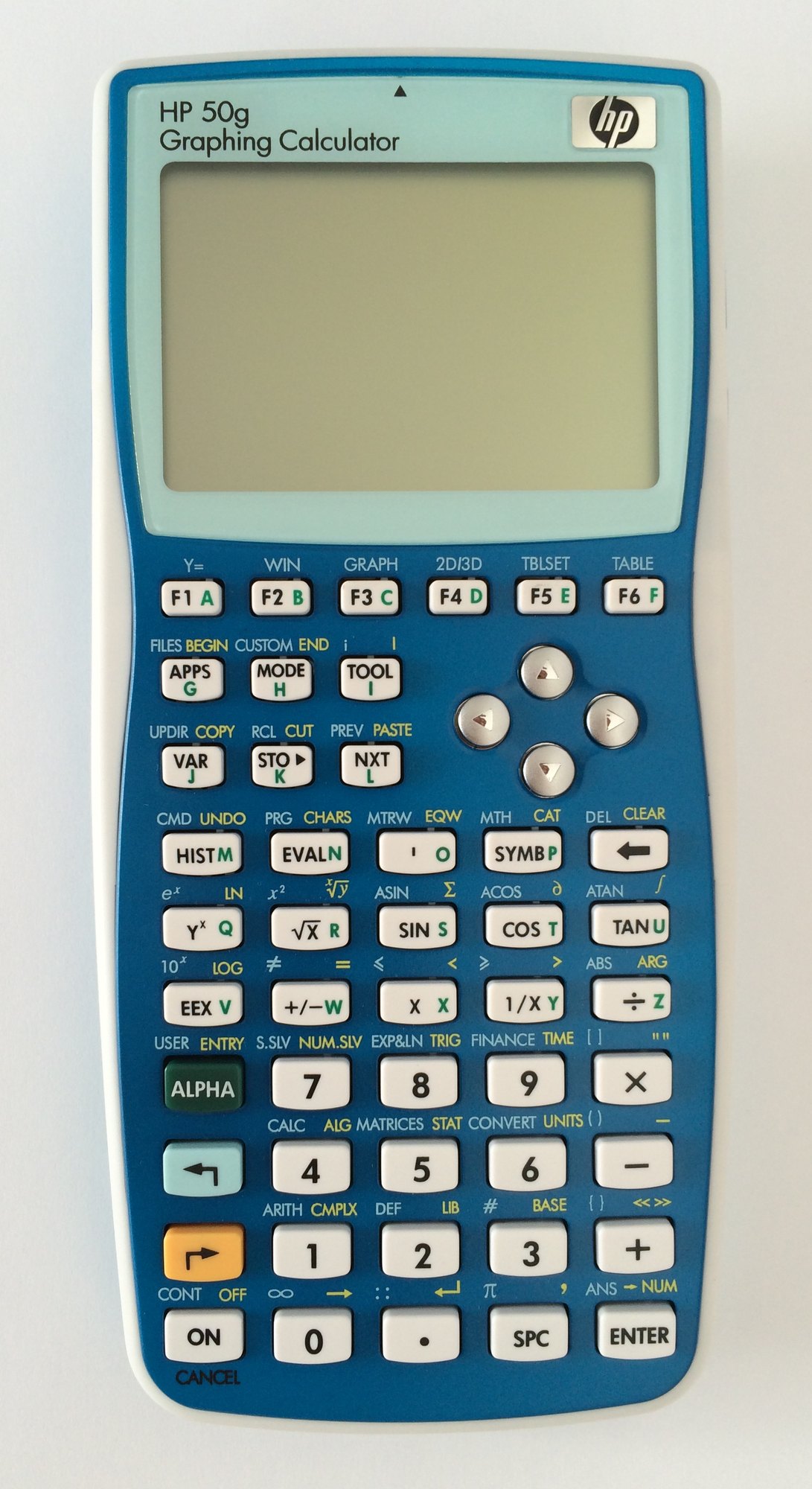
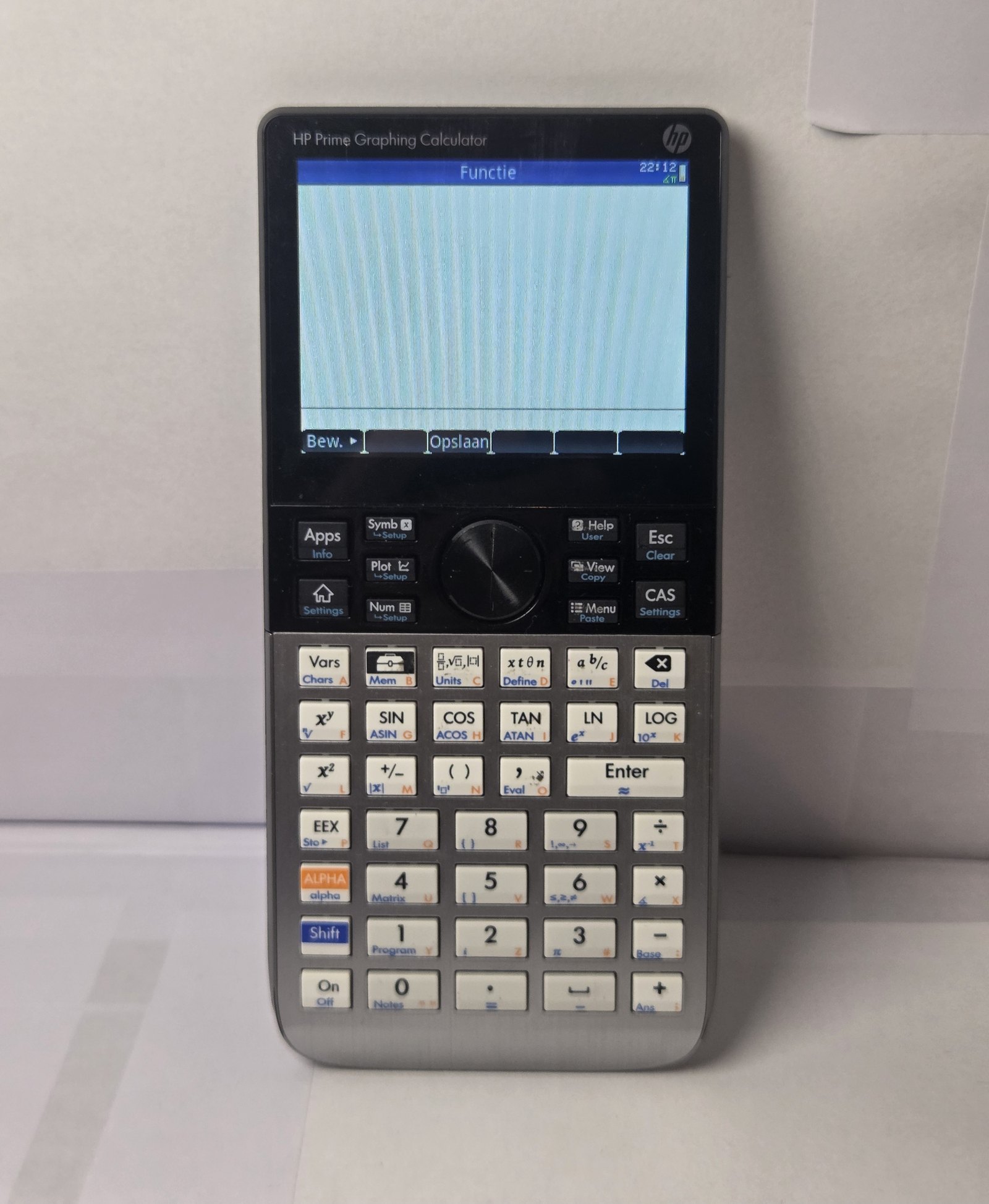
HP’s 49G of August 1999 was its first calculator with flash memory and an updatable operating system, and its computer algebra, by Bernard Parisse and others, was later released as open source. In the 49g+ of 2003 an ARM processor emulated the old Saturn chip, so that the RPL software of 1990 could keep running. The HP 50g, made from 2006 to 2015, was HP’s last RPL calculator. The HP Prime of October 2013 started again: a 3.5 in, 320 × 240 colour touch screen, an ARM processor at 400 MHz (528 MHz in the G2 of 2018), computer algebra from the Xcas/Giac system, and exam-mode lights on its top edge. Since 2022 its development and manufacture have been in the hands of Moravia Consulting and Royal Consumer Information Products.
3.8 NumWorks, 2017
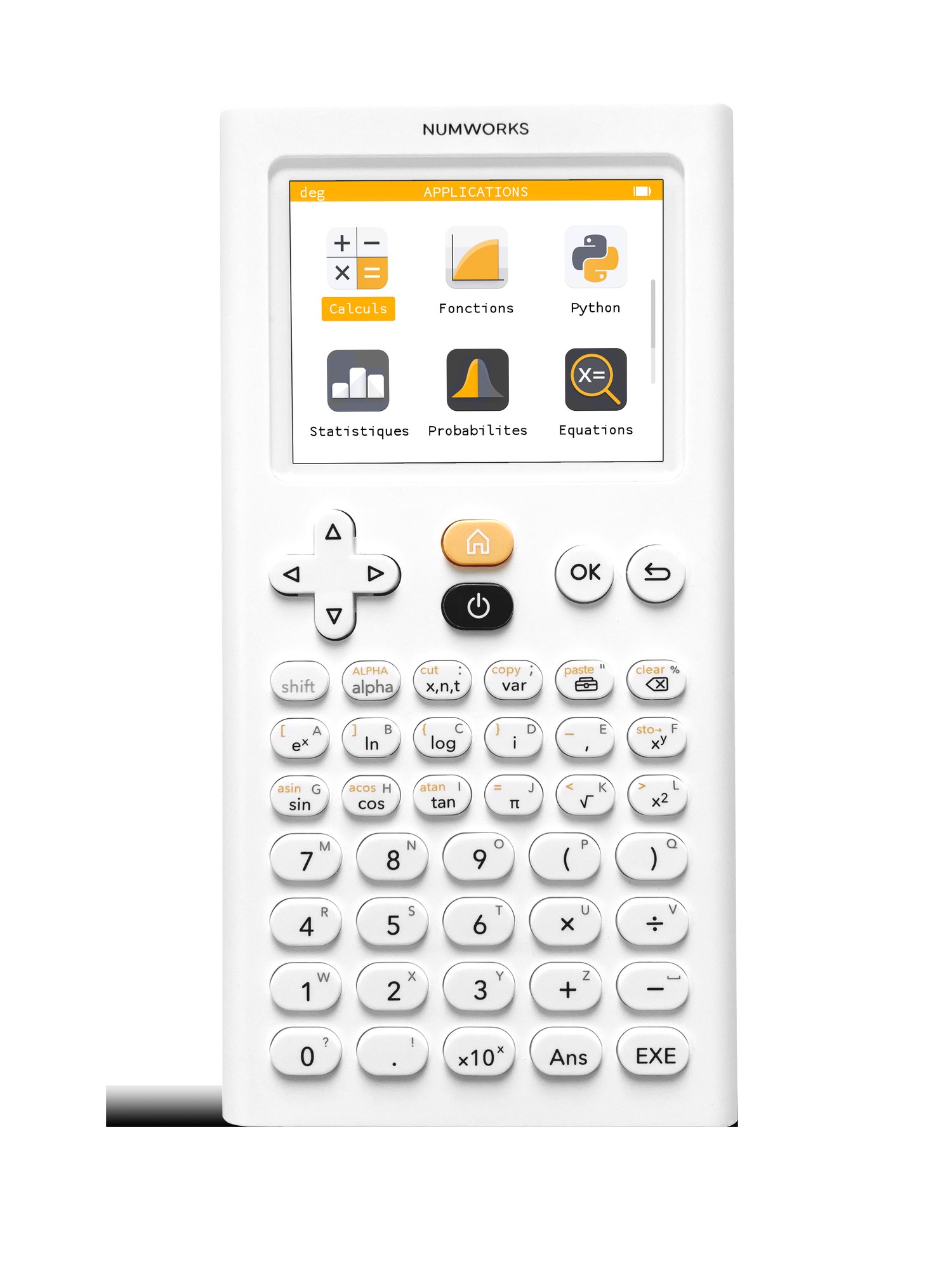
The newest maker is a French start-up. NumWorks was founded on 4 March 2016 by Romain Goyet, a former Apple software engineer, and released its first calculator, the N0100, on 29 August 2017 for €80 or $100. It had a 320 × 240 colour screen, an STM32 ARM microcontroller at 100 MHz, MicroPython from the start, and published software and hardware designs. Writing in LWN in September 2017, Tom Yates noted that its software licence still forbade commercial reuse, so the device was “far from fully free at this point”, but called it “a major step forward from the user-hostile position most calculator manufacturers have taken”. Later models moved to faster processors, and later firmware locked the bootloader against third-party software.
3.9 Who sells them
In the United States the market is Texas Instruments’. The NPD Group counted 1.6 million graphing calculators sold in the country between July 2013 and June 2014, and 93 % of them were TI’s; Casio had the other 7 %. TI’s own figure for its share of all scientific and graphing calculators used in American schools, in 2007, was 60 %. Elsewhere the picture is different: in France Casio and TI together hold well over 90 % of the market, and in Japan Casio leads the calculator market as a whole, though a 2004 study found graphing calculators were not standard in Japanese classrooms. How TI won the American classroom, and why the price of its calculators has hardly moved in thirty years, is the subject of volume 4.
Sources
- TI: Wikipedia, “TI-84 Plus series”, “TI-84 Plus CE series”, “TI-Nspire series”, “TI-89 series” and “Comparison of Texas Instruments graphing calculators”; TI’s press releases of 27 January 2015 (TI-84 Plus CE) and 26 July 2021 (TI-84 Plus CE Python); Cemetech news and forum (TI-84 Plus C SE, 2012–13; CE, 13 and 15 January 2015; Python, 2019–20; TI-84 Evo, 27 January 2026); the TI-84 Evo announcement (28 April 2026) as reported by Pulse 2.0 and Engadget; Target’s listings (read 27 October 2026); TI’s TI-84 Plus C Silver Edition Guidebook, TI-84 Plus and Silver Edition Guidebook, TI-89 Titanium Guidebook and Voyage 200 Guidebook; Getting Started with the TI-84 Plus CE Python.
- Casio: Wikipedia, “Casio Prizm”, “Casio graphic calculators” and “CFX-9970G”; T.H.E. Journal (April 2003) on the ClassPad 300; Cemetech (28 September 2024) on the fx-CG100.
- HP: Finseth’s data sheets; Wikipedia, “HP 49/50 series” and “HP Prime”.
- NumWorks: Wikipedia, “NumWorks”; Tom Yates, LWN.net (28 September 2017).
- Market: the NPD figures as reported by The Rubicon (20 February 2020) and Mental Floss; Education Week (17 October 2007); LSA (France); Casio’s 2010 CSR report (Japan).
Comments (0)