Curta · Volume 2
Curt Herzstark: Vienna, Buchenwald, and the Drawings That Survived
The Curta was designed twice. It was designed the first time in Vienna in 1936–38, on a drawing board, in a family calculating-machine works, by a man who had spent half his working life demonstrating other people’s machines to bank clerks and architects and therefore knew exactly what was missing from the market. It was designed the second time between 1943 and 1945 in a concentration camp, in pencil, on small pieces of card, in the evenings and on Sundays, from memory and from first principles, by the same man — and it is the second set of drawings that became the machine.
2.1 The family firm
Curt Herzstark was born in Vienna on 26 January 1902. His father, Samuel Jakob Herzstark, owned Rechenmaschinenwerk AUSTRIA, Herzstark & Co., a firm that built calculating machines and modified and extended existing ones. The son grew up inside the trade.
He attended the higher technical school for mechanical engineering and took his baccalaureate, and in parallel — from 1916 to 1918 — served a precision-mechanics and toolmaking apprenticeship in his parents’ works. That combination is worth pausing on, because it explains a great deal about the Curta. He was not a theoretician who later learned to make things; he was a toolmaker who also had the drawing office. He then spent a year in Germany at the Astra Werke and the Wanderer Werke, where he saw a modern machine park at close range, and returned to Vienna to work as designer, consultant and salesman.
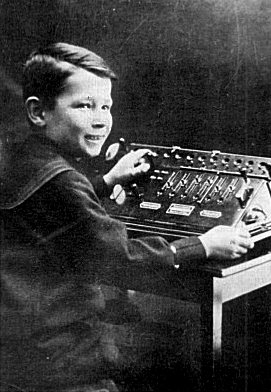
Roughly half his working hours were spent with customers. He organised sales in Czechoslovakia and Hungary and occasionally Romania, trained sub-agents, and demonstrated the firm’s own four-function machine — the “Austria-Herzstark” — and the Astra adding machine in person to savings banks, public authorities, companies and architects. He contributed enough design improvements that the firm’s “Multimator” accounting machine carried many patents in his name.
It is from those thousands of customer conversations, by his own account, that the idea came. The smallest calculating machines then available weighed several kilograms and were bulky. Customers kept describing, without quite asking for it, a machine they could carry.
2.2 The 1936 concept and the 1938 breakthrough
In 1936 Herzstark worked out the concept of a small machine driven from a central crank shaft, built around a single central stepped drum — in the German literature a Staffelwalze, rendered in the museum’s English panels as a “relay roller”. That first concept had a disabling limitation: it could add, but it could not subtract.
The breakthrough came in 1938, and it is the single idea on which the entire machine rests. Herzstark worked out that if the drum carried a second set of teeth giving the nines complement of each digit alongside the set giving the digit itself, then shifting the drum axially would switch the machine between adding a number and adding that number’s complement — and adding the nines complement, with a unit of correction, is subtraction. The consequence is that subtraction can be performed with the crank turning in the same direction as addition. No reverse gear is needed, no second drum stack is needed, and the machine can therefore be made very much smaller.
Two patents followed. The main patent, numbered 747073, covers the calculating machine with a single relay roller; a second, 747074, covers the reduction. The dates attached to these numbers are not consistent across sources, and the inconsistency should be noted rather than smoothed over. The Liechtenstein National Museum’s exhibition panel reproduces the patent specification and captions it as submitted by Curt Herzstark on 19 August 1938. Herbert Bruderer’s chronology gives the same date, 19 August 1938, but labels it the granting of the main patent, and gives 13 April 1939 for the granting of 747074. A grant in 1938 for an application filed in 1938 would be unusually fast; the museum’s reading, that these are filing dates, is the more plausible one, but the two published accounts do genuinely conflict and this could not be resolved from the material consulted.
Herzstark built a first working sample. It was too large, but it proved the principle. He then built a smaller functional model, close to the size the production machine would eventually be, with setting pins for entry and a mechanical indicator on top for the result. It added, subtracted, multiplied and divided.
2.3 The Anschluss
Austria was annexed by the Third Reich in March 1938 — the same year as the patents. On his father’s side Herzstark was classified as Halbjude; his mother Marie was classified as “Aryan”, and for that reason the company could remain in the family’s hands. Officially, Curt Herzstark was now merely an employee of his own family’s firm. His father had died on 24 October 1937, leaving the estate to his wife, with the intention that Curt would take the company over later; that succession was now legally impossible.
The works survived for a time by taking military orders. The firm was directed to build mechanical measuring instruments for the Wehrmacht, and production of calculating machines was suspended. The pocket machine went into a drawer.
2.4 Arrest and Buchenwald
In 1943 Herzstark was arrested. The museum’s panel states simply that the arrest was without justification. Rick Furr’s collected biography, drawn from Herzstark’s own later accounts, gives the formal charges as helping Jews and subversive elements and improper contact with Aryan women, and states that the actual conduct behind the arrest was his defence of employees who had been caught listening to enemy broadcasts — one of whom was executed. He was held in Vienna, moved to the Pankrác prison in Prague, and in October 1943 deported to Buchenwald as a political prisoner.
He was first put to work in the camp gardens. Because of his technical background he was then transferred to the adjoining Gustloff works, an SS precision-engineering plant. The camp administration knew about the calculating machine — one account has an official opening the conversation with “See, Herzstark, I understand you’ve been working on a new thing, a small calculating machine” — and he was given permission to draw. The stated reason was that the finished machine would be presented to Hitler after the war was won.
So the drawings were made in a concentration camp, on small pieces of card, in pencil, in the time left over from an SS armaments plant. He was working without the original 1938 drawings, without the prototypes, and without a drawing office — reconstructing, refining and completing a design he had left in Vienna five years earlier.
On 18 August 1944 the Gustloff works were bombed. Hundreds of prisoners were killed. A prisoner lying beside Herzstark was fatally injured by a bomb fragment; he survived. What remained of production was moved to a salt mine at Billroda, some thirty kilometres away, and the prisoners were returned to Buchenwald two days before liberation.
The camp was liberated on 11 April 1945. Herzstark walked out with a complete set of drawings for a pocket calculating machine in his pocket.
2.5 Sömmerda, and the second flight
The drawings still had to become an object. The finished artwork was produced by Wilma Scherer from the Buchenwald sketches, and Herzstark had the first prototype components made at Rheinmetall-Borsig AG in Sömmerda, in Thuringia, where he was offered — and took — a directorship and supervised reconstruction. Three prototypes were built between roughly July and November 1945.
Then the map intervened. Thuringia fell inside the Soviet occupation zone, and Herzstark, who had good reason by then to distrust any authority that took an interest in a useful engineer, concluded that he was at risk of being taken east. He left. The departure was abrupt enough to be recorded from the other side: the minutes of the works council meeting of Rheinmetall-Borsig AG in Sömmerda for 4 December 1945 note his flight. He reached Vienna carrying the prototype components, by an account that the museum panel describes only as involving “a number of adventures”.
What he found in Vienna was not encouraging: worn-out and outdated machinery, no money, almost no work, and a company whose succession had, during his absence, already been arranged in favour of his brother Ernst. Under those circumstances he was unwilling to set up production of his machine there.
He assembled the three prototypes in the old Vienna works, had a first advertising brochure printed in 1946, and went looking for money. Austrian government agencies turned him down; there was no funding for new industrial projects. He wrote to six Swiss companies, and two expressed interest. He was on the point of travelling to one of them — which would have made the Curta a Swiss product — when an invitation arrived from an unexpected direction.
That invitation, and what it cost him, is the subject of the next volume.
Comments (0)