Scientific Calculators · Volume 3
The LCD Generations, 1978 to Today
The LED scientifics of the 1970s ate batteries: the HP-35 ran three to five hours on a charge, the TI-30 needed a 9-volt cell. Liquid-crystal displays used almost nothing, and once they arrived the scientific calculator settled into the form it still has: a slim case, a long battery life or a solar cell, and more functions every few years. The big changes since have been in the display: from one line of seven-segment digits to two lines, then to dot-matrix screens that show mathematics as it is printed.
3.1 Liquid crystal and the sun
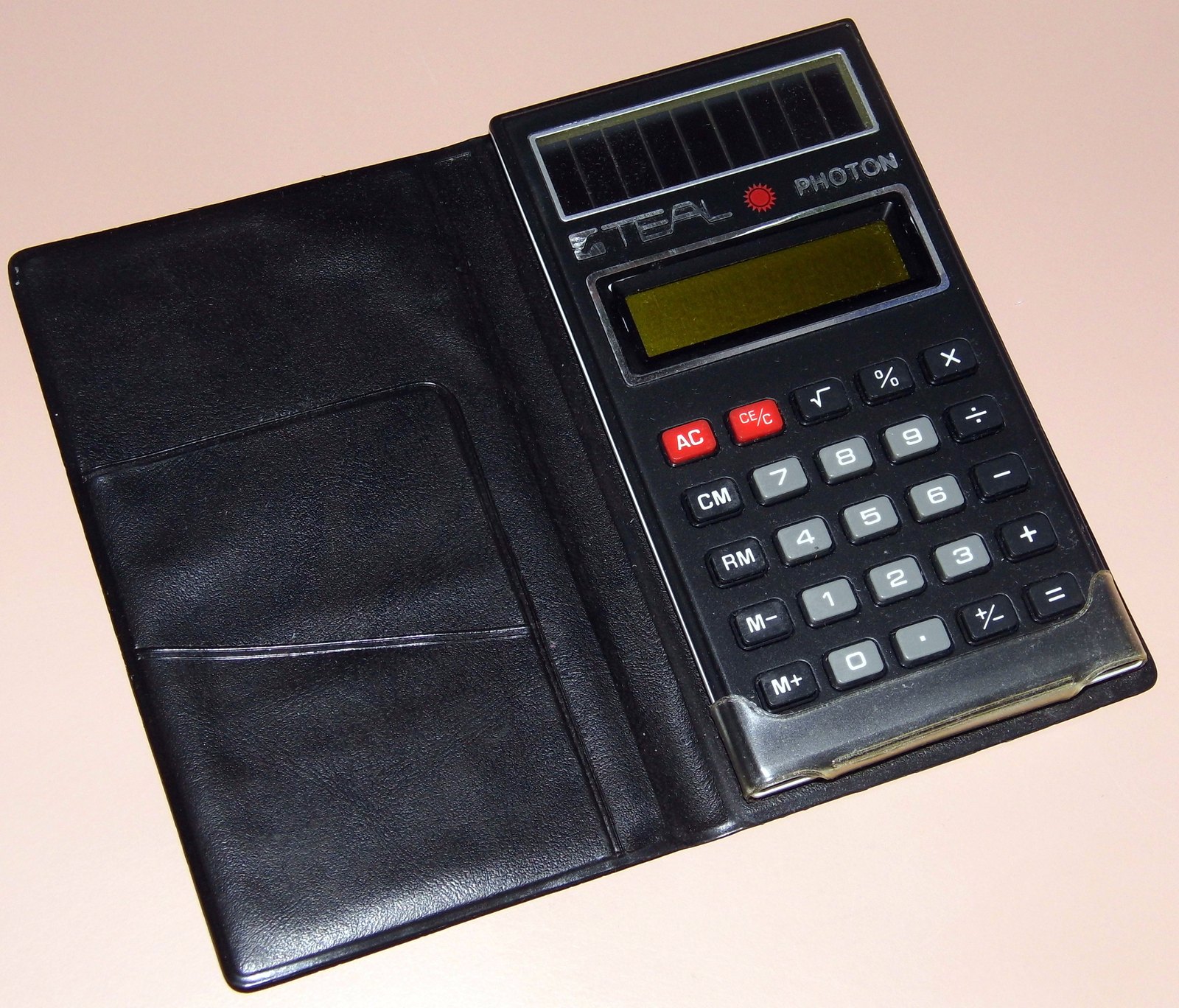
Sharp’s EL-805 of 1973 was the first calculator with a liquid-crystal display, with the display, a CMOS chip and the wiring on one piece of glass; it ran about 100 hours on a single AA cell. Texas Instruments sold an LCD TI-30 in Europe from 1978. The first solar calculators followed at the end of the 1970s: Sharp’s EL-8026 “Sun Man”, whose cells recharged a battery, and the Teal Photon, which ran on light alone and needed bright light to do it. Solar scientifics followed in the early 1980s; Casio’s fx-910 is dated to 1980 by one source and 1984 by another. Today the usual arrangement is a strip of amorphous-silicon cells with a button cell behind it, so the calculator works in a dim room.
3.2 The Casio fx-82 line
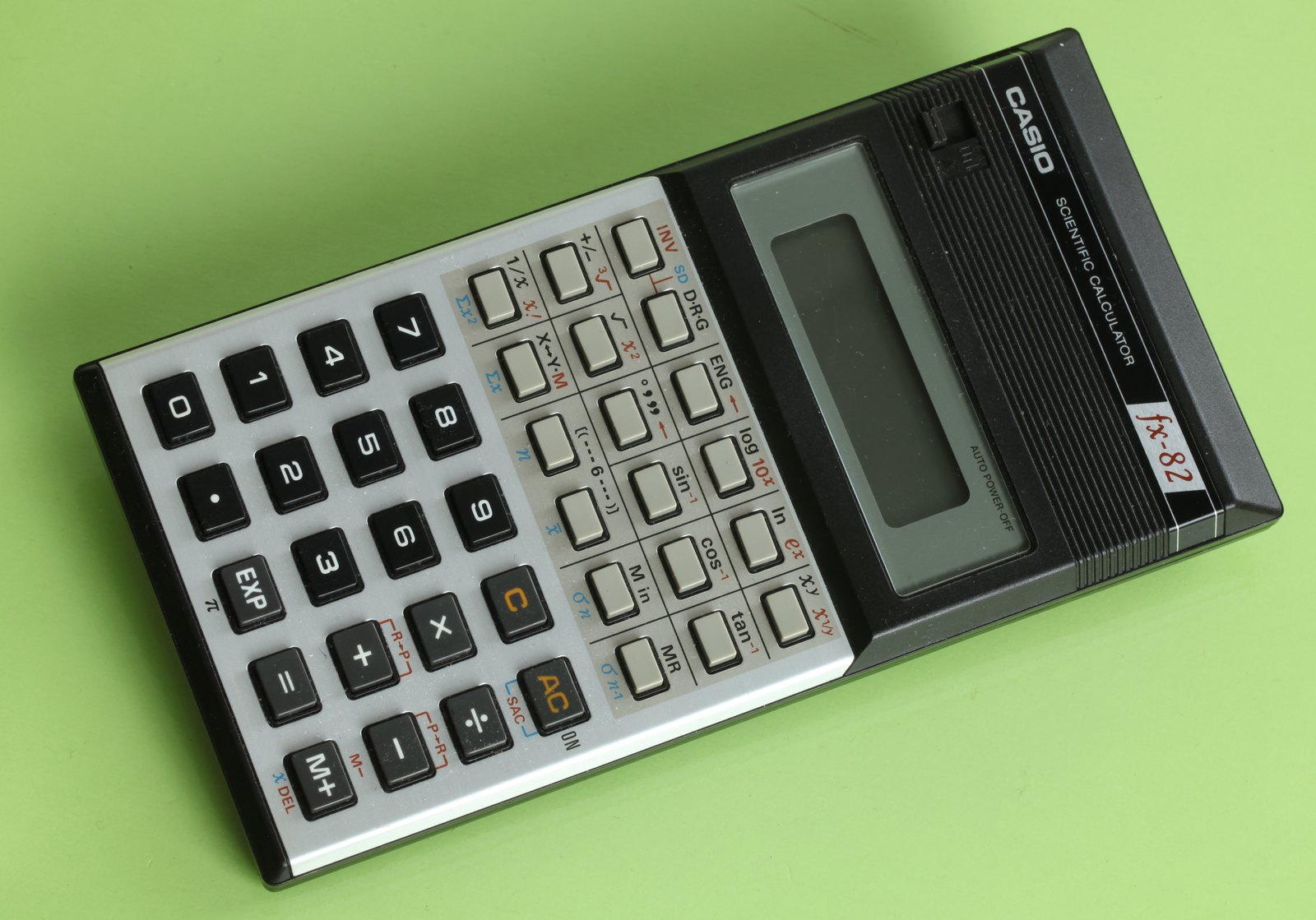
Casio has used the number fx-82 since 1982 for its basic school scientific, and the line runs to the present:
Table 1 — Casio has used the number fx-82 since 1982 for its basic school scientific, and the line runs to the present
| Model | Year | What changed |
|---|---|---|
| fx-82 | 1982 | the first, an LCD machine |
| fx-82A, B, C | 1985–88 | new cases; the C cost-reduced with flexible boards and bare chips |
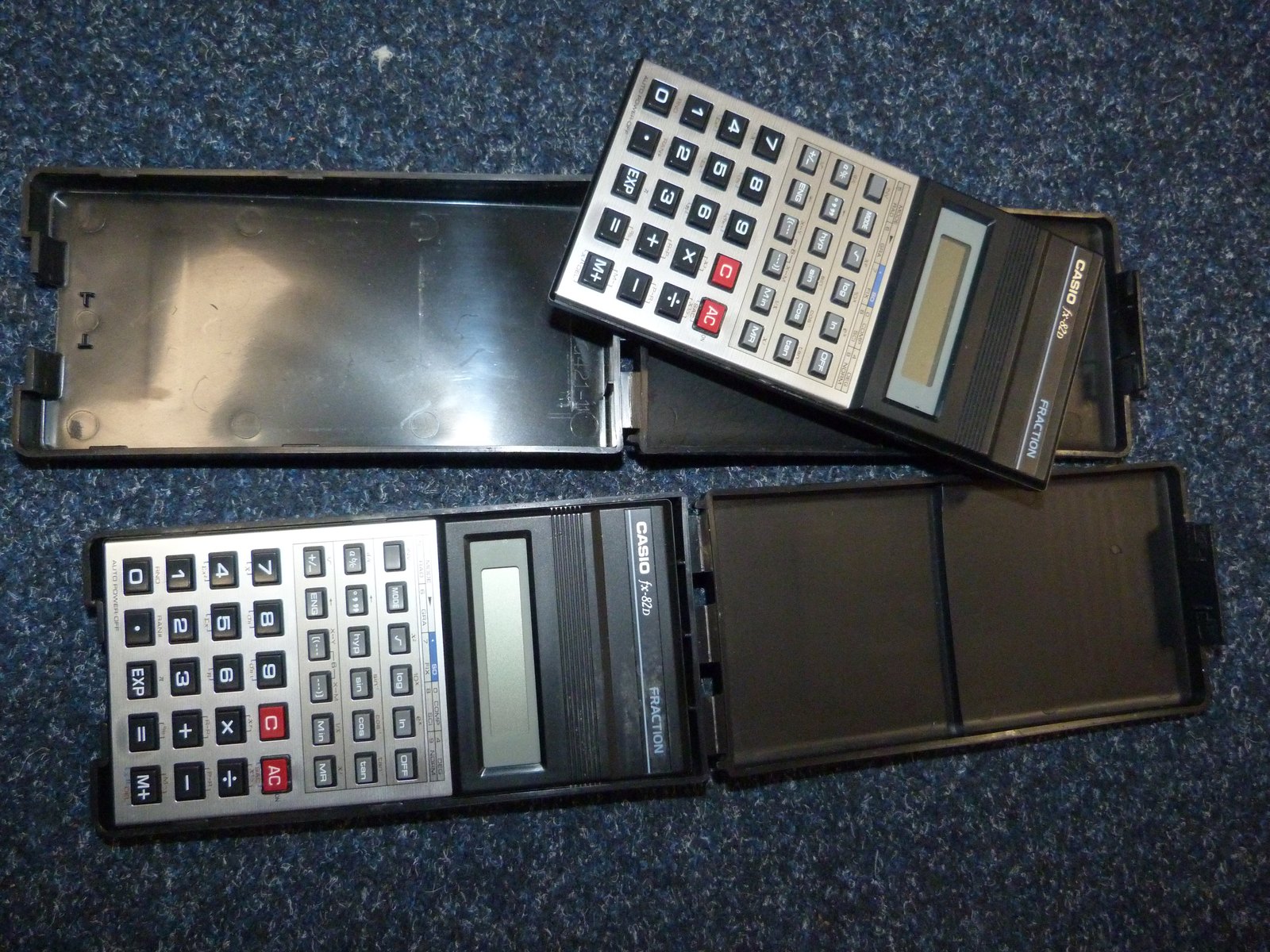
| fx-82D | 1989 | fractions |
| fx-82L, LB, SOLAR | 1990–92 | bigger display; hard case; solar power |
| fx-82 SUPER | 1994 | faster functions, 10 + 2 digits |
| fx-82W | 1997 | two-line display; V.P.A.M. |
| fx-82TL | 1998 | S-V.P.A.M. |
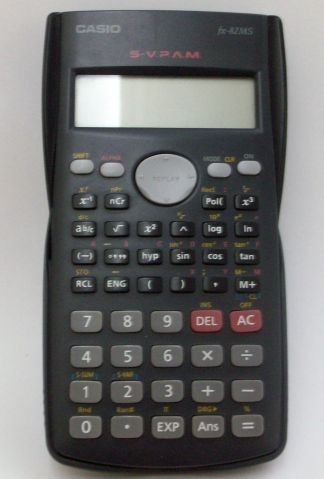
| fx-82MS | 2001 | more memory, redesigned keys, a statistics mode |
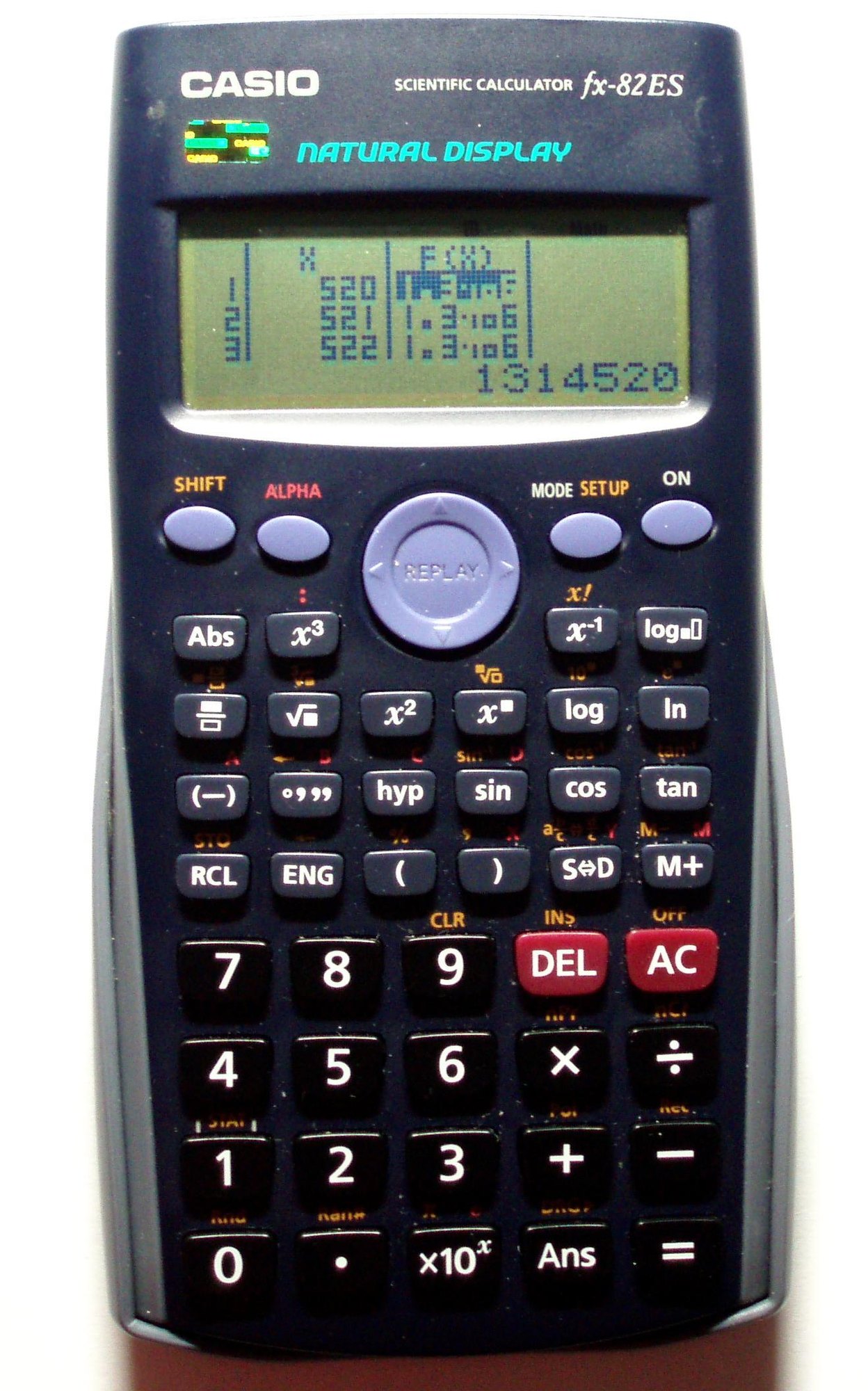
| fx-82ES | 2004 | Natural Display, 96 × 31 dots |
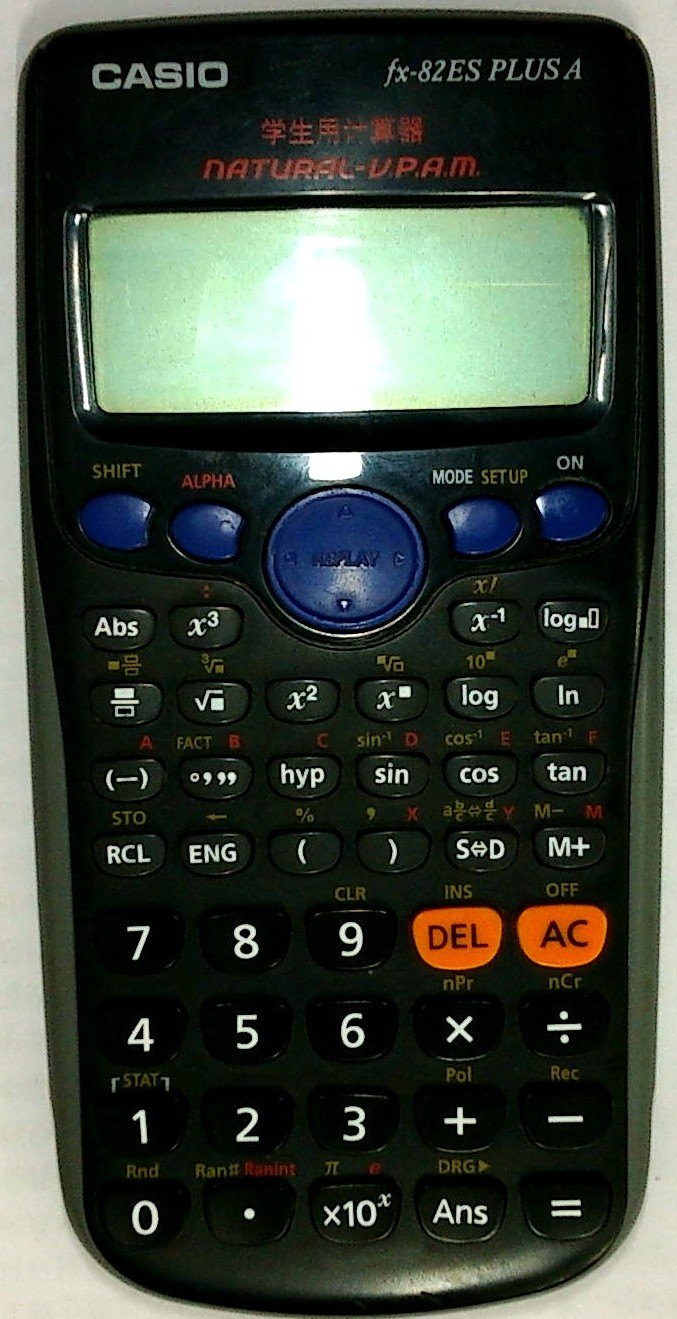
| fx-82ES PLUS | 2008 | improved ES |
| fx-82EX ClassWiz | 2015 | 192 × 63 dots |
| fx-82MS II, fx-82ES PLUS II | 2021, 2023 | updates of the older lines |
| fx-82CW | 2020s | second-generation ClassWiz |
V.P.A.M., Casio’s “Visually Perfect Algebraic Method”, is its name for entering an expression the way it is written and seeing it on the display before pressing =; it came to Casio’s Japanese models in 1994 and to the fx-82 with the fx-82W. The ES series of 2004 took it a step further with Natural V.P.A.M., the Natural Display.
3.3 Natural Display
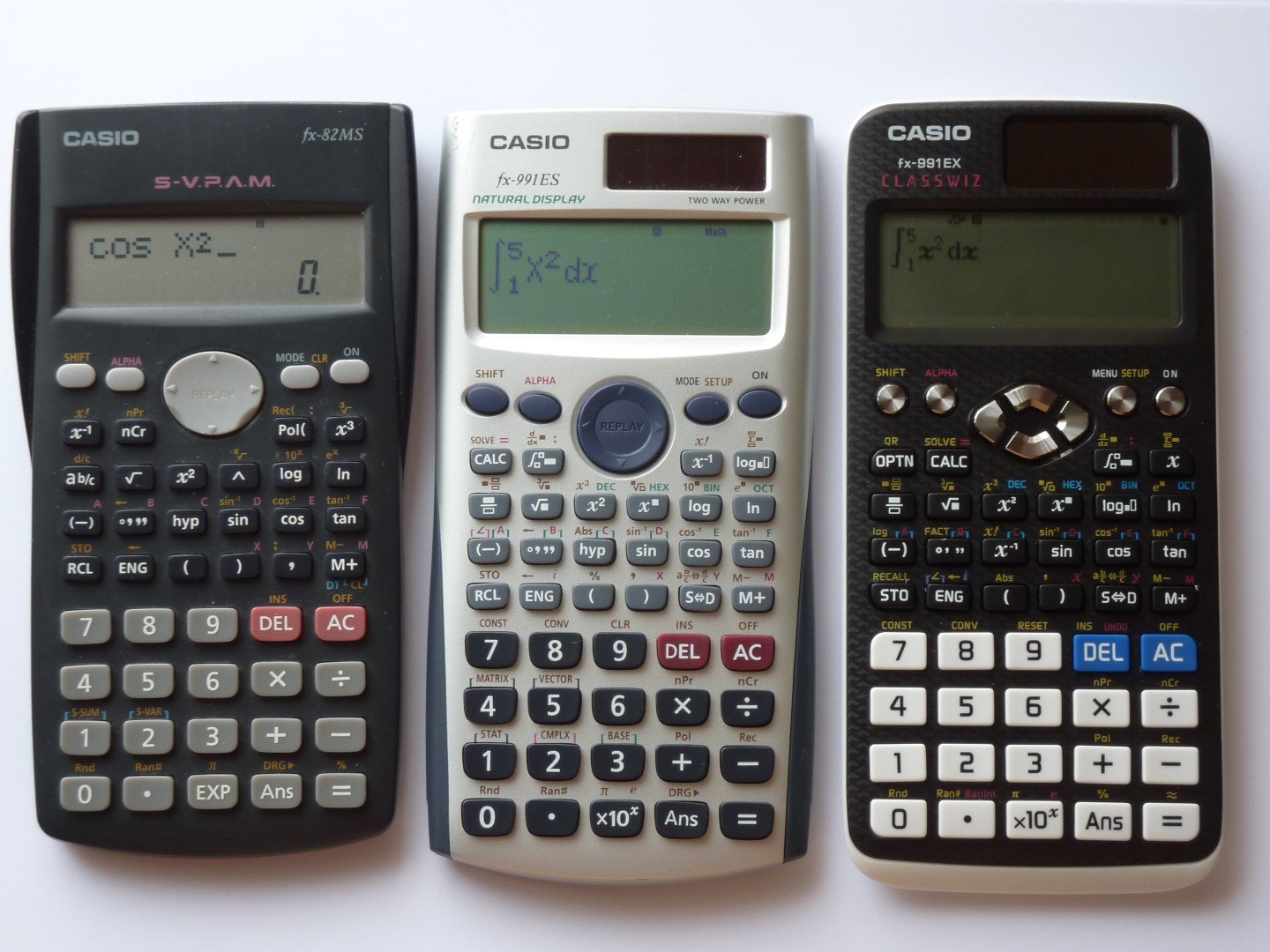
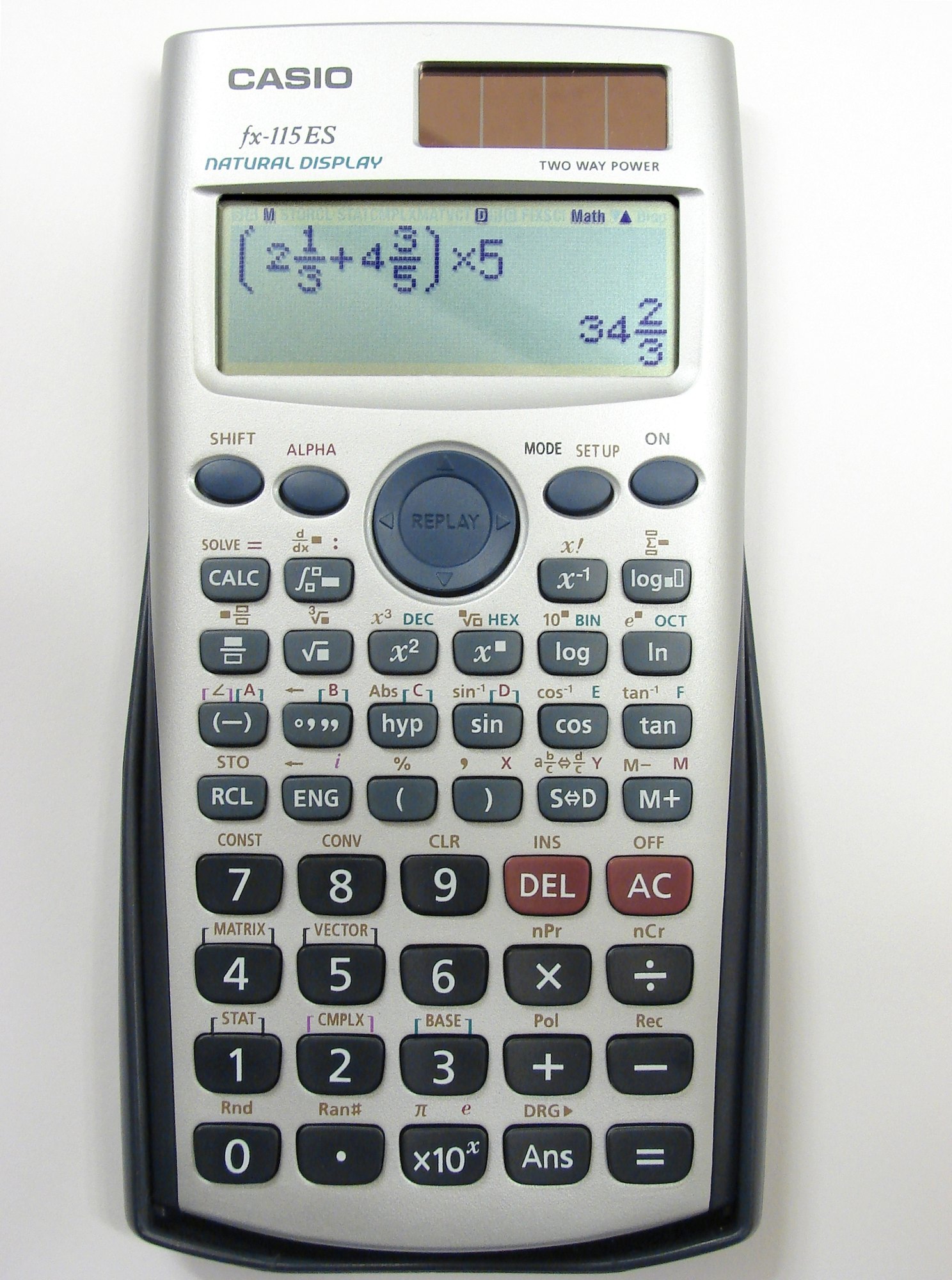
Casio’s own chronology lists “2004: fx-82ES” with a “natural display” that shows fractions and square roots “as they appear in printed materials”. Casio’s brochure for the series called it “Natural Expression Input Display” and “Natural Expression Result Display”: a fraction is typed with a fraction template, its numerator above its denominator; a root sign stretches over what is under it; a power sits raised. The fx-82ES was the first calculator to do it, on a 96 × 31 dot display that can hold two lines of ordinary text or one stacked expression. The same year came the rest of the ES family, the fx-83ES, 85ES, 300ES, 350ES, 115ES, 570ES and 991ES among them, all built round the same chip and firmware.
3.4 ClassWiz
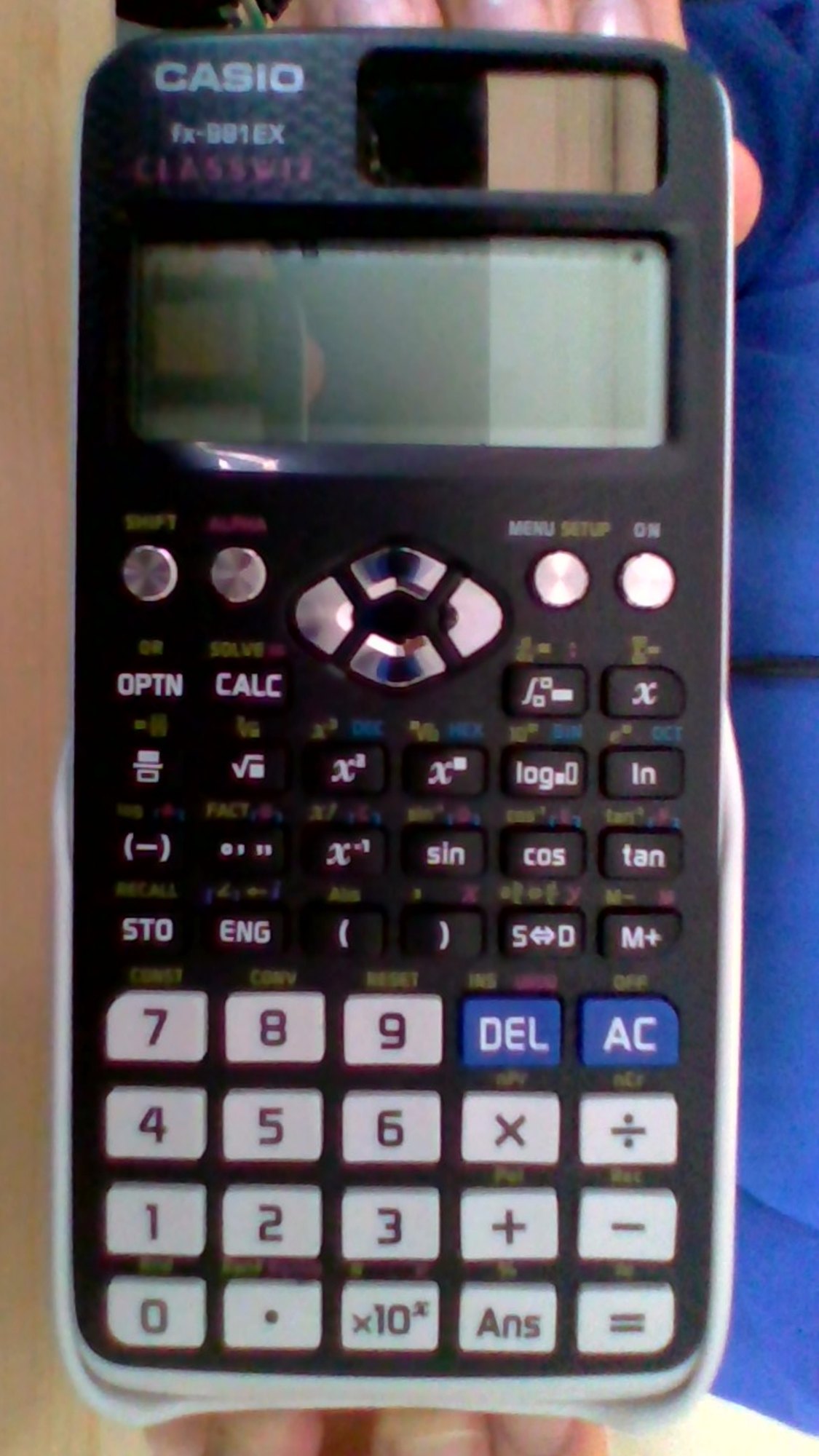
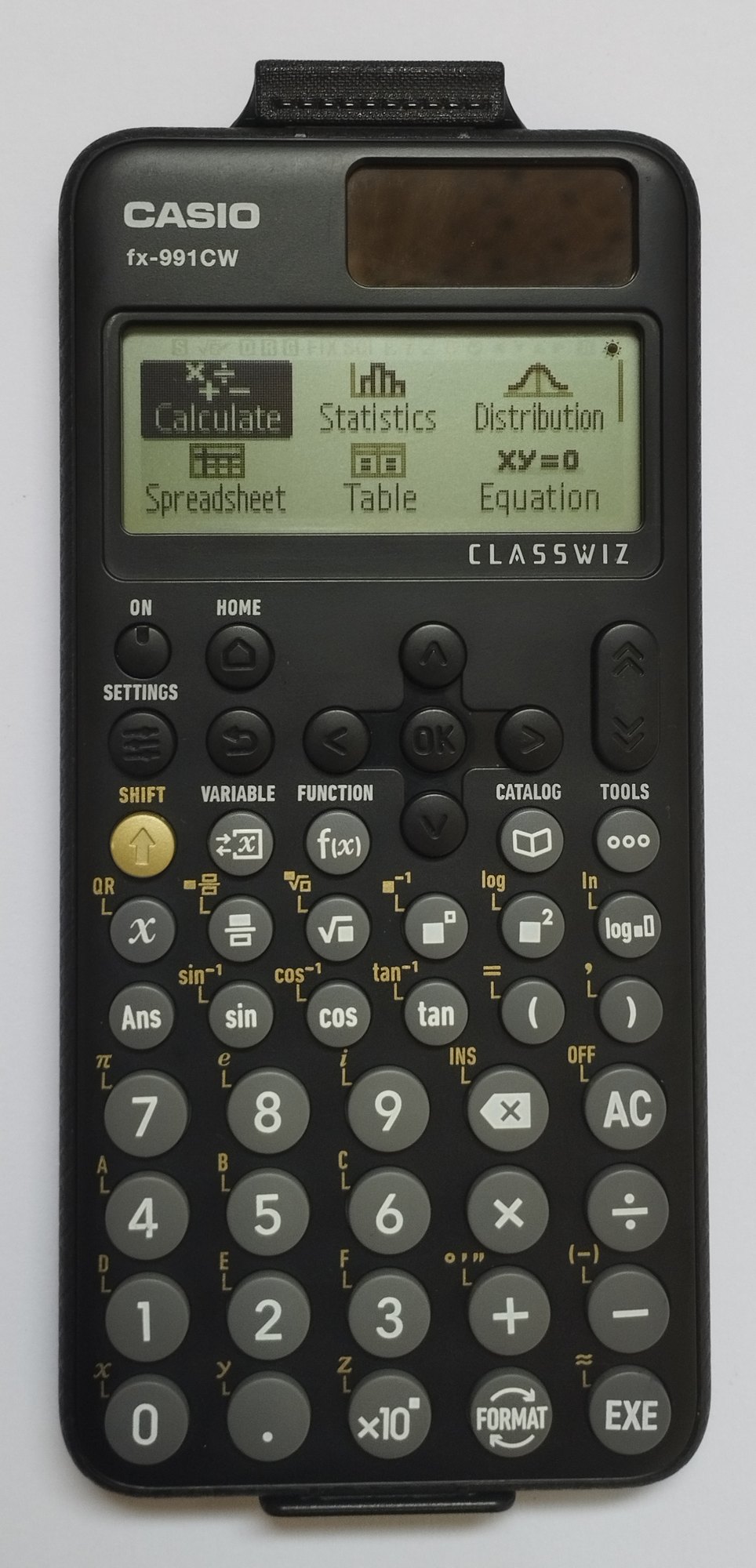
In 2014 and 2015 Casio replaced the ES series with the ClassWiz (EX) series, with a display of 192 × 63 dots, four times the resolution, a QR-code function for viewing results on a phone, and a spreadsheet on the top model. The second-generation ClassWiz CW of late 2022 has a four-level greyscale display. Casio says it has sold 1.8 billion calculators of all kinds in sixty years; one market estimate puts its scientific sales at 13 to 23 million a year.
3.5 The TI-30 line to the TI-36X Pro
Texas Instruments kept the TI-30 name through every change of technology:
Table 2 — Texas Instruments kept the TI-30 name through every change of technology
| Model | Year | Notes |
|---|---|---|
| TI-30 | 1976 | LED, 9 V battery, about $25 |
| TI-30 LCD | 1978 | Europe only |
| TI-30 II, SLR, III | 1981–84 | LCD; the SLR not yet solar |
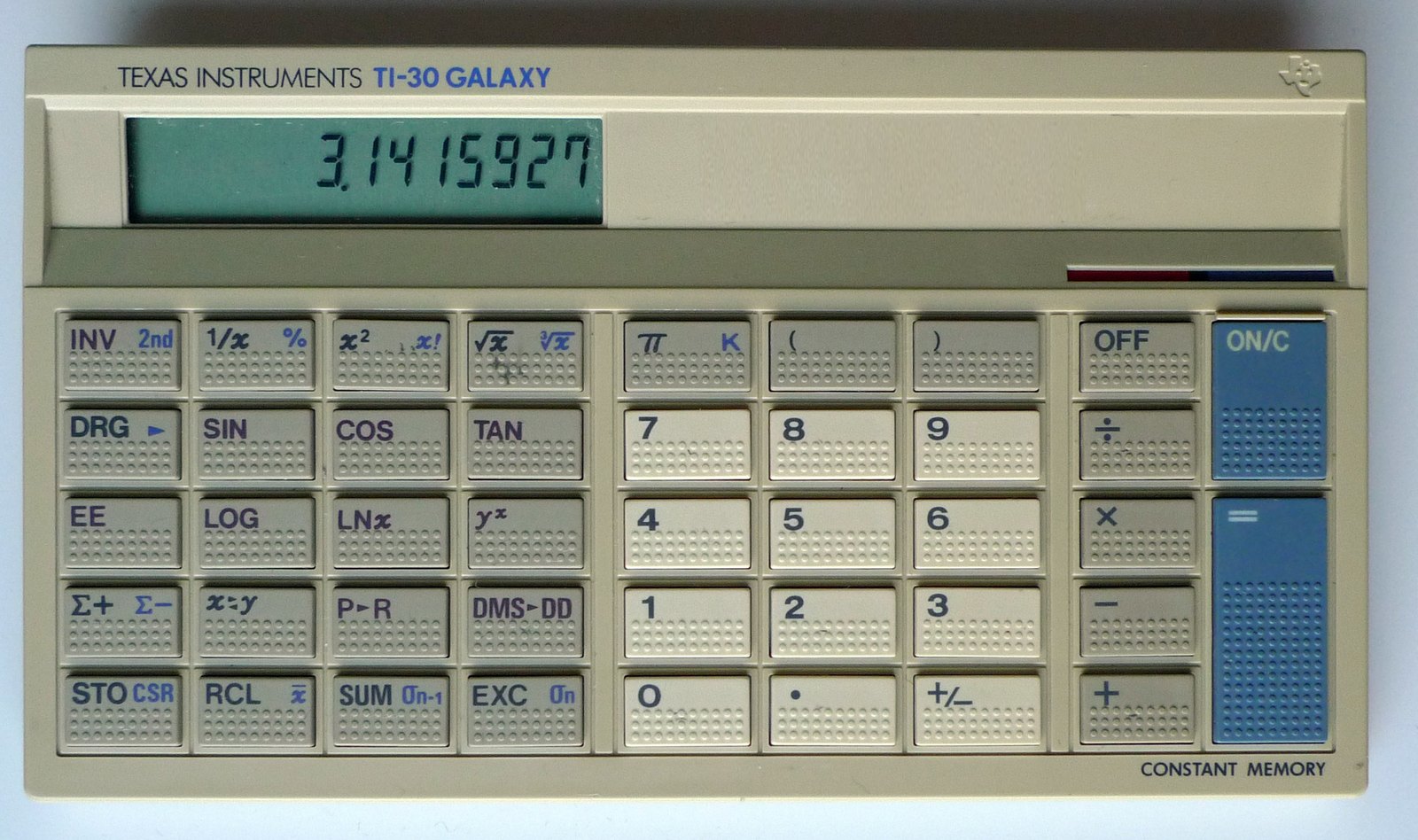
| TI-30 Galaxy | mid-1980s | a landscape case |
| TI-30 SLR+ | 1987 | solar |
| TI-30X, TI-30Xa | 1993–94 | 10 digits |
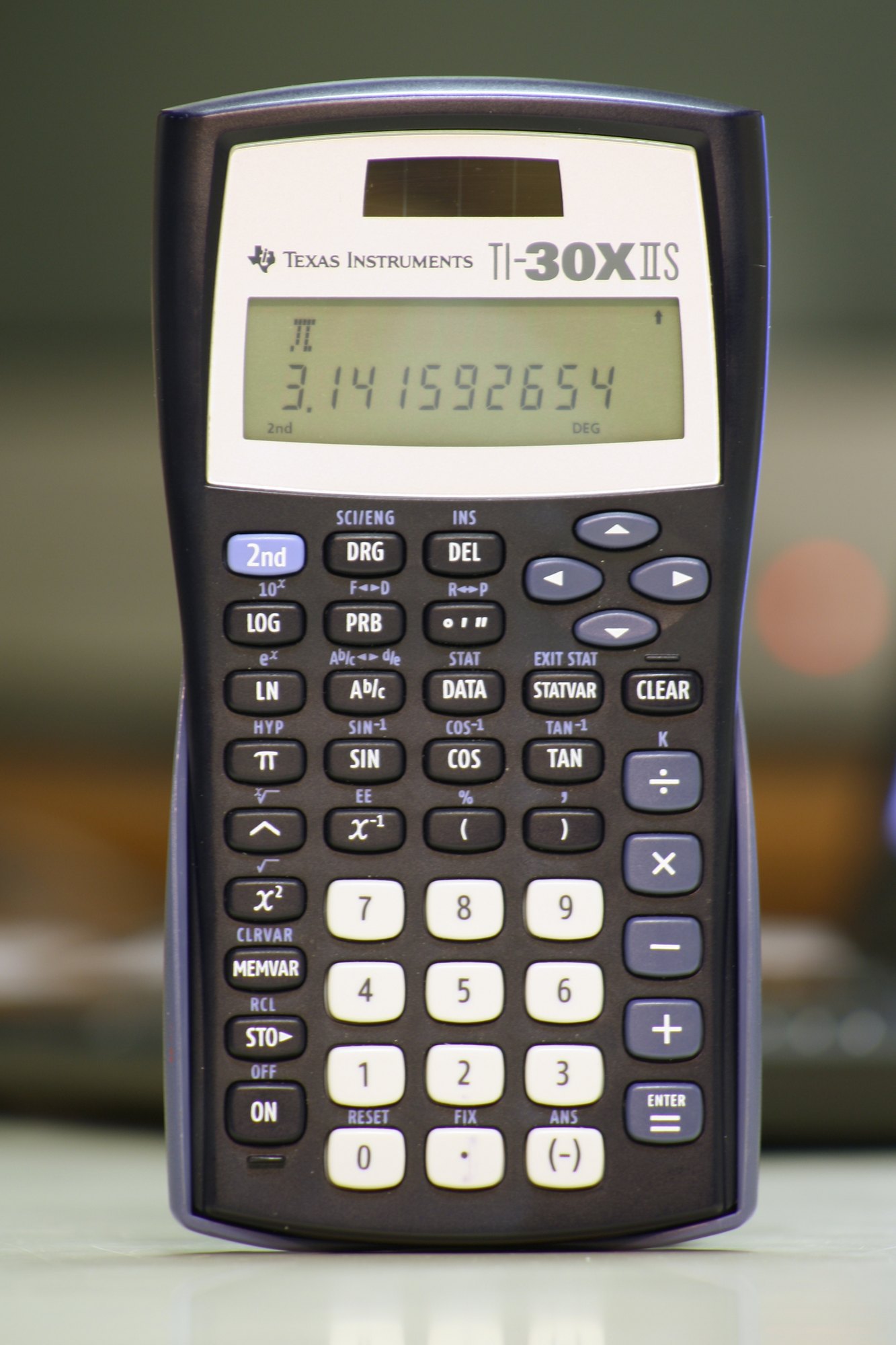
| TI-30X IIS | 1998–99 | two-line display, a cursor pad |
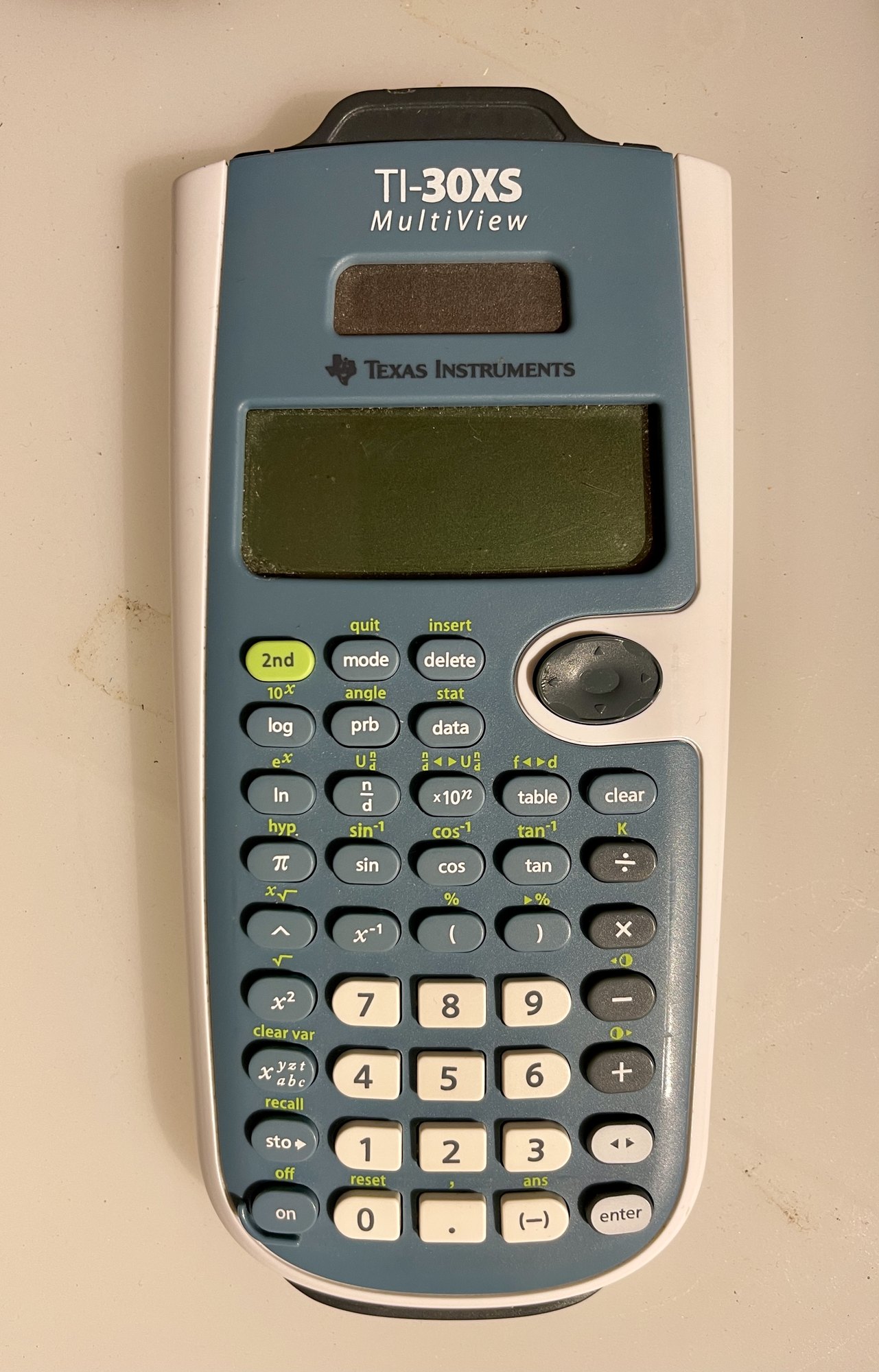
| TI-30XS MultiView | 2005–07 | TI’s first non-graphing dot-matrix screen, four lines |
| TI-30X Pro MultiView | 2010 | Europe; withdrawn for wrong answers, relaunched 2011 |
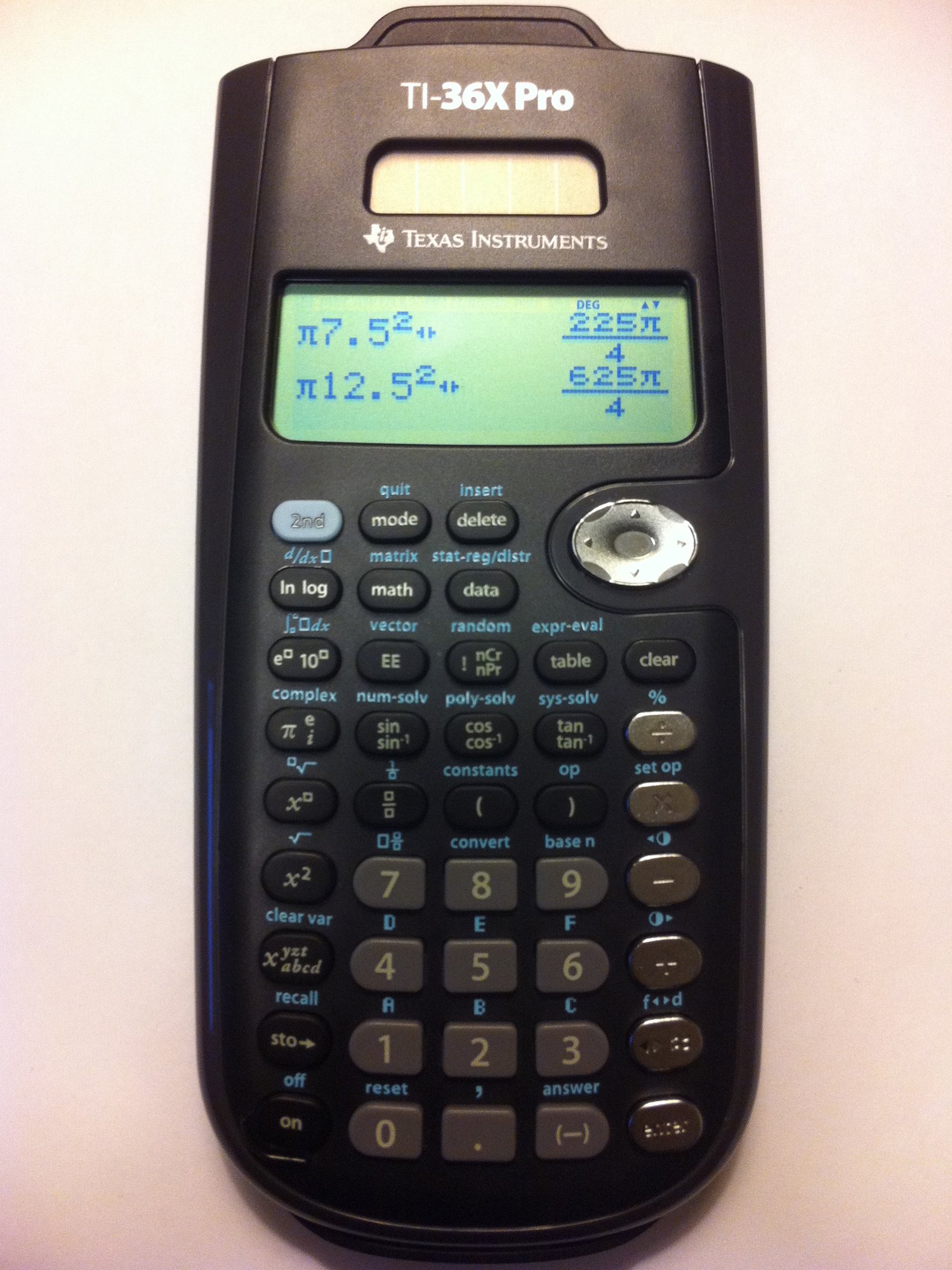
| TI-36X Pro | 2011 | the American and international version, $25 |
| TI-30X Pro MathPrint | 2018 | successor, with a sharper display |
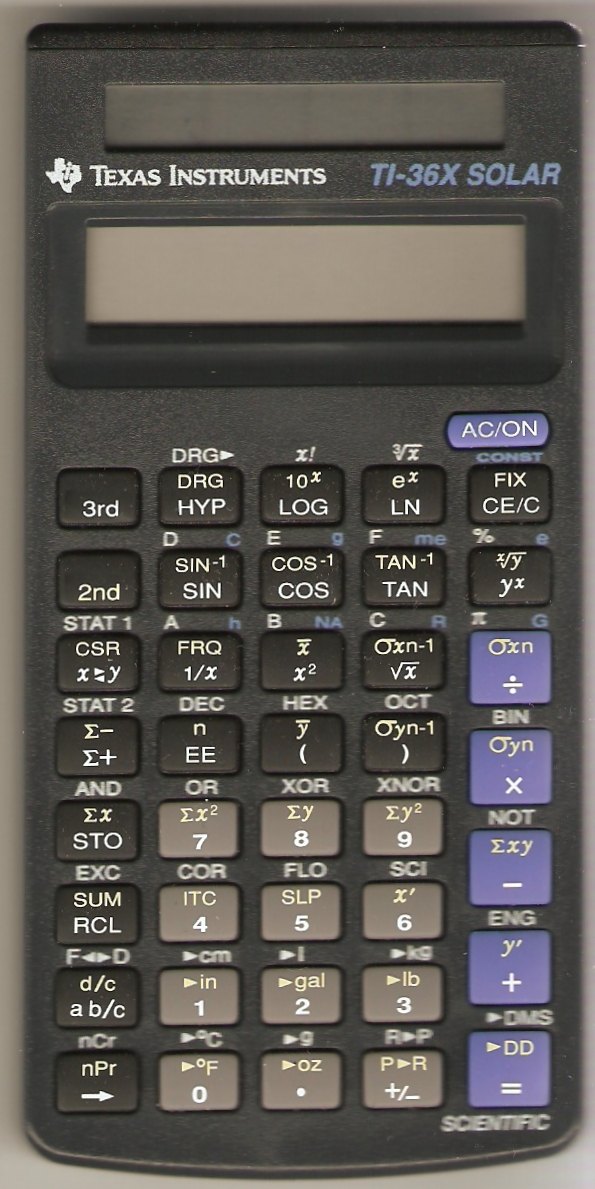
Alongside ran the TI-36 family, which began in 1986 as a solar TI-35 PLUS and became the TI-36X Solar in the 1990s, an engineering calculator without a dot-matrix screen. The TI-36X Pro carries the name on.
TI calls its textbook display MathPrint, on a screen it calls MultiView, which shows several earlier calculations above the current one. The TI-36X Pro has a mode switch between MathPrint and the older one-line Classic display, and the two even evaluate stacked powers differently, as the operating volume shows.
3.6 The withdrawn calculator
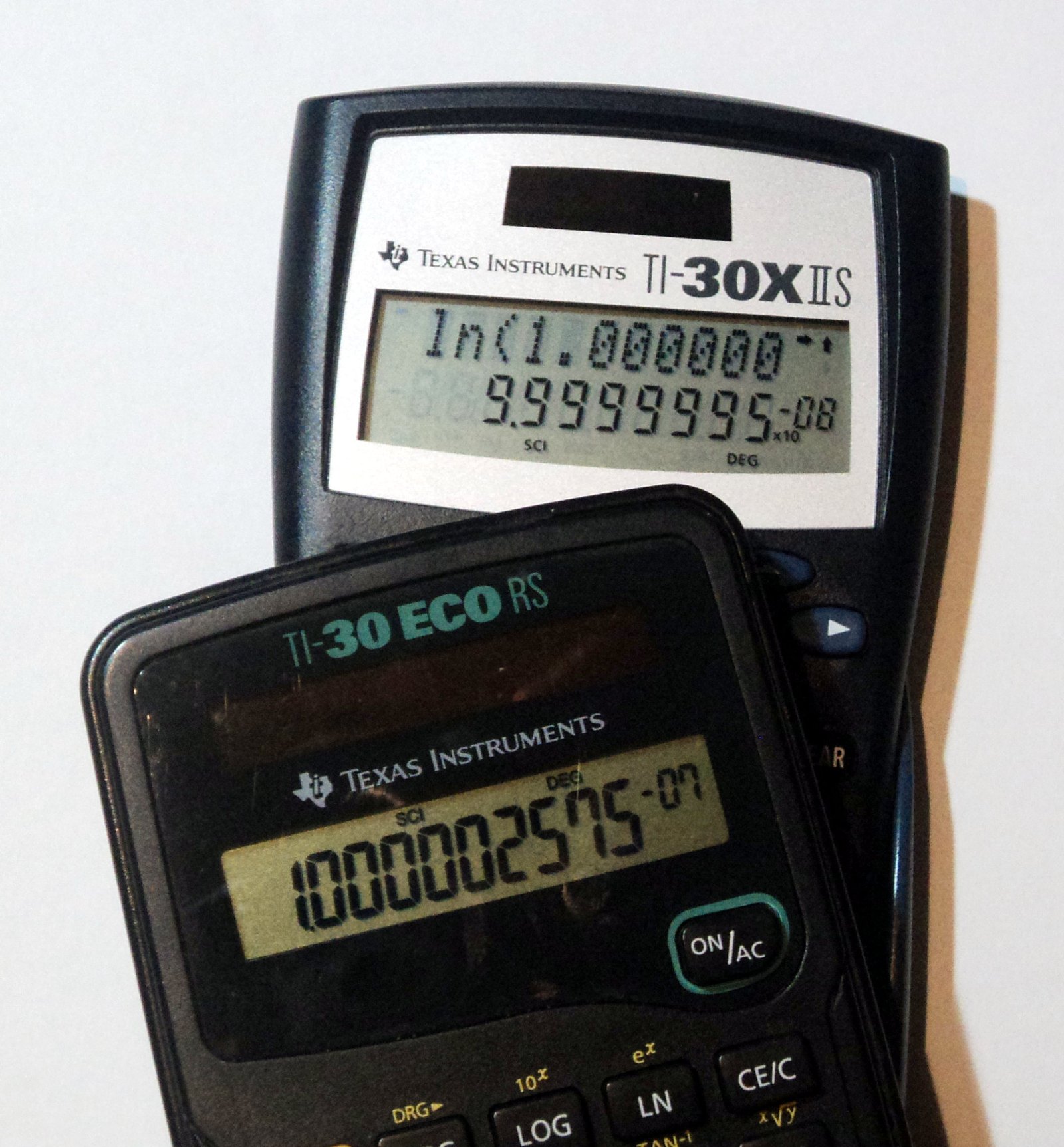
The TI-36X Pro’s European twin had an awkward start. TI launched the TI-30X Pro MultiView in September 2010 and withdrew it in October for giving wrong results; it came back in May 2011, the same month the TI-36X Pro was announced in America. The relaunched calculator had a smaller bug of its own: some mixed numbers involving π displayed wrongly. Calculator bugs are an old story at TI too: the TI-30X of 1993 introduced a logarithm bug that was not fixed in the TI-30Xa until 2015.
3.7 Hewlett-Packard and Sharp
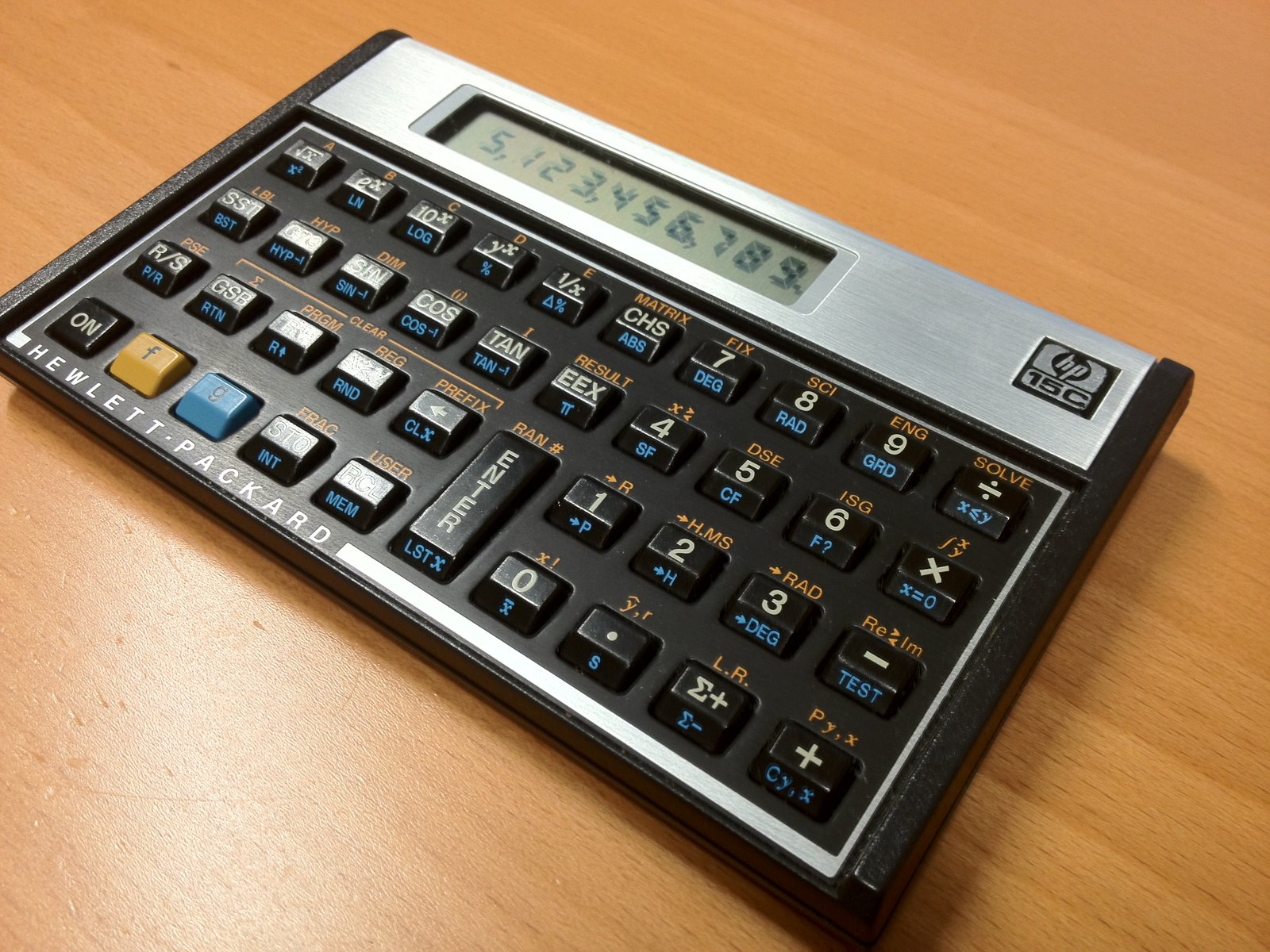
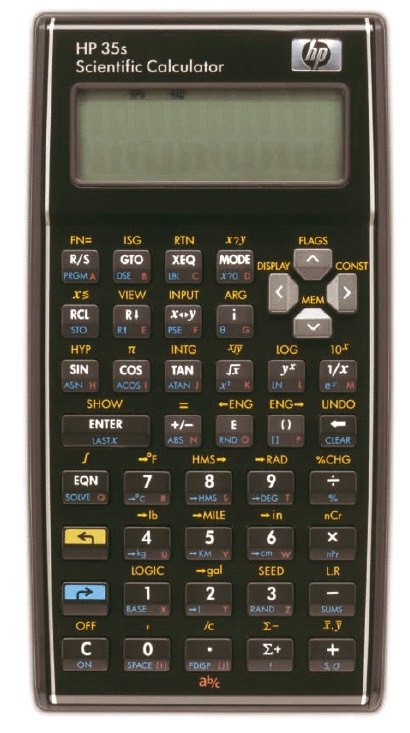
Hewlett-Packard stayed with reverse Polish notation and with engineers. The HP-15C of 1982 ($135), a landscape programmable scientific with complex numbers and matrices, became a cult machine; HP reissued it as a Limited Edition in 2011 and a Collector’s Edition in 2023. The HP 35s of July 2007, $59.99, marked the HP-35’s 35th anniversary and offers both RPN and algebraic entry.
Sharp’s answer to Natural Display and MathPrint is WriteView, used on its EL-W models by 2010, such as the four-line EL-W516.
Sources
- Wikipedia, “Casio fx-82 series”, “Casio V.P.A.M. calculators”, “TI-30”, “TI-36”, “HP-15C”, “HP 35s”, “Solar-powered calculator”; Casio’s corporate chronology and its ES-series brochure of 2005; Sharp’s company history (EL-805).
- TI’s press release of 16 May 2011 on the TI-36X Pro; TI-Planet and Omnimaga on the TI-30X Pro MultiView’s withdrawal.
- Casio guides in the Library: fx-82MS, fx-82ES, fx-115ES and fx-991ES, fx-570ES PLUS and fx-991ES PLUS, fx-570EX and fx-991EX ClassWiz.
- TI guides in the Library: TI-36X Pro, TI-30X Pro MultiView, TI-30XS MultiView, TI-30X IIS, TI-36X Solar, and the 1980s TI-30-II, TI-30 SLR and TI-55 manuals.
Comments (0)